For more information on the Royal House of Hohenzollern-Sigmaringen Romania, please visit https://www.royalhouseofromaniahohenzollern-sigmaringen.com/head-of-family
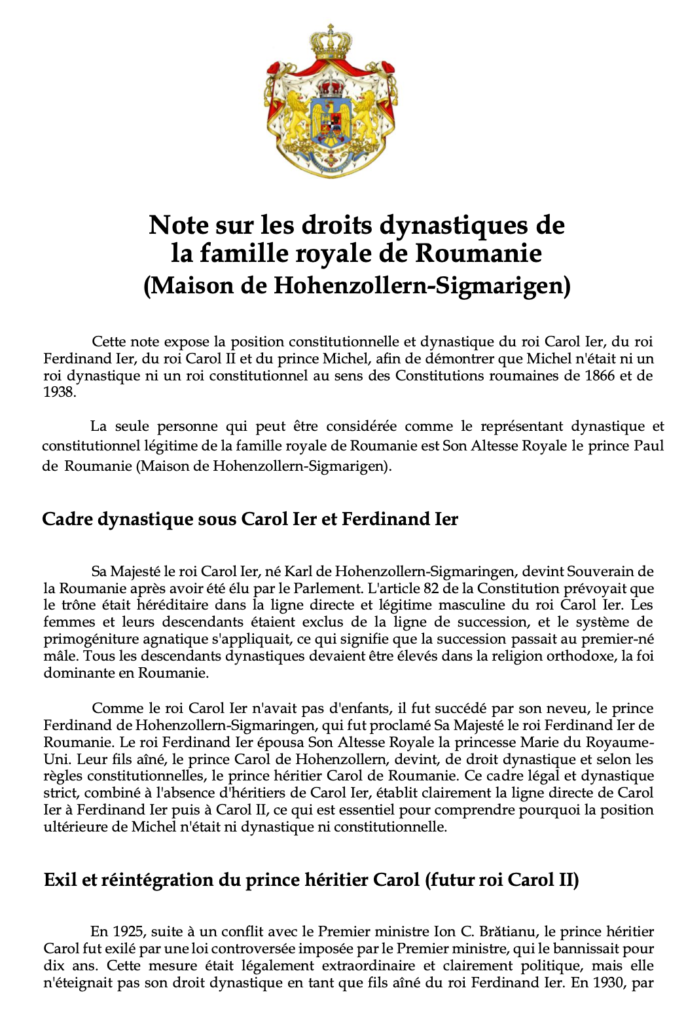
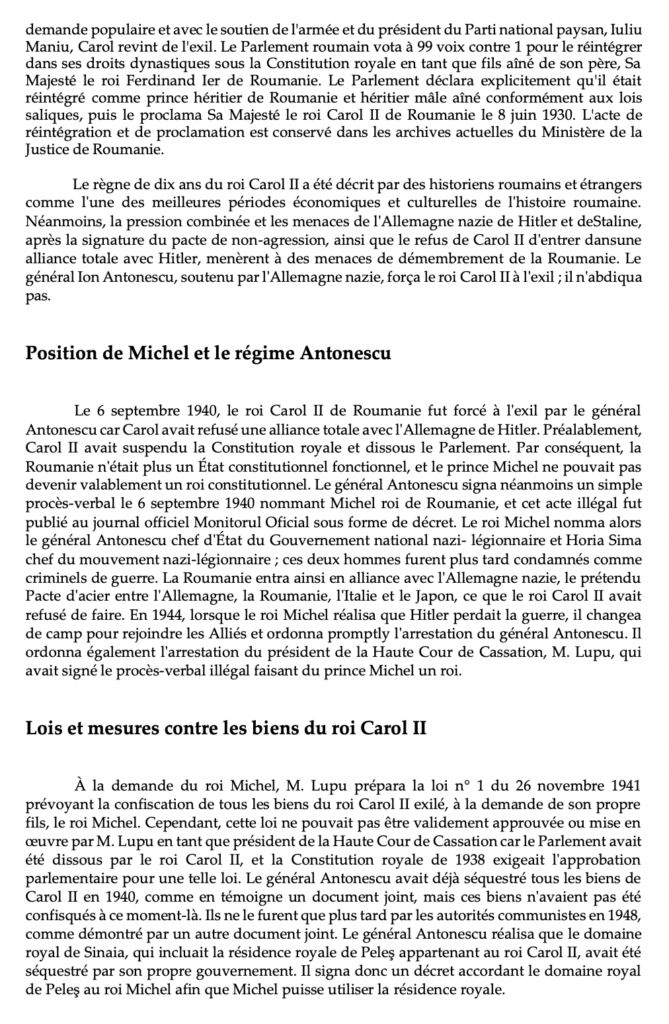
Traduction en français de la note sur les droits dynastiques de la famille royale de Roumanie
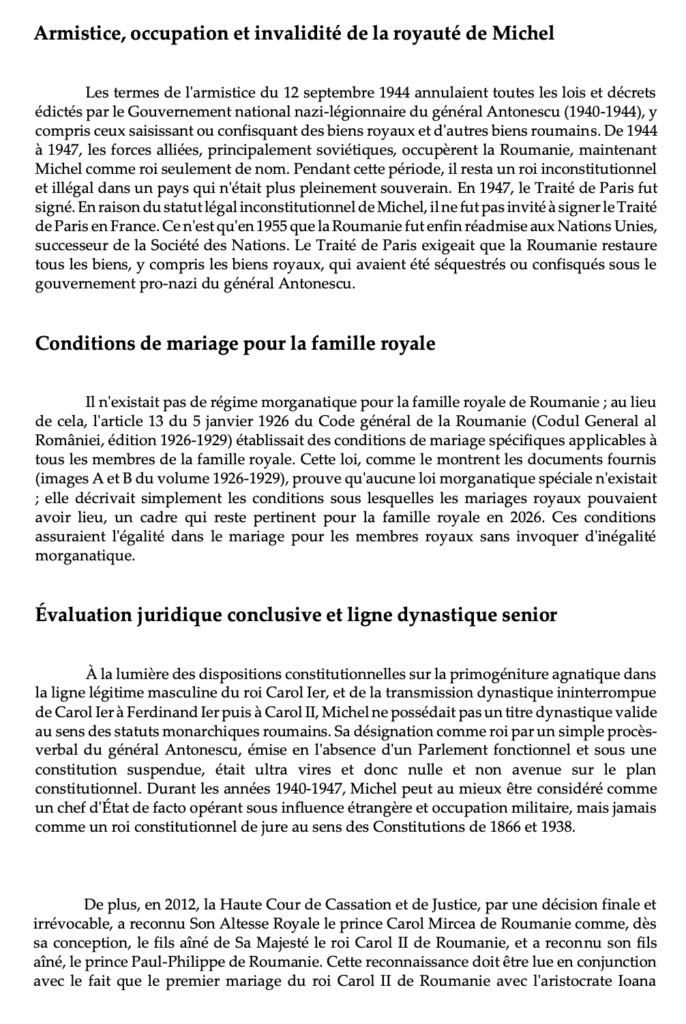
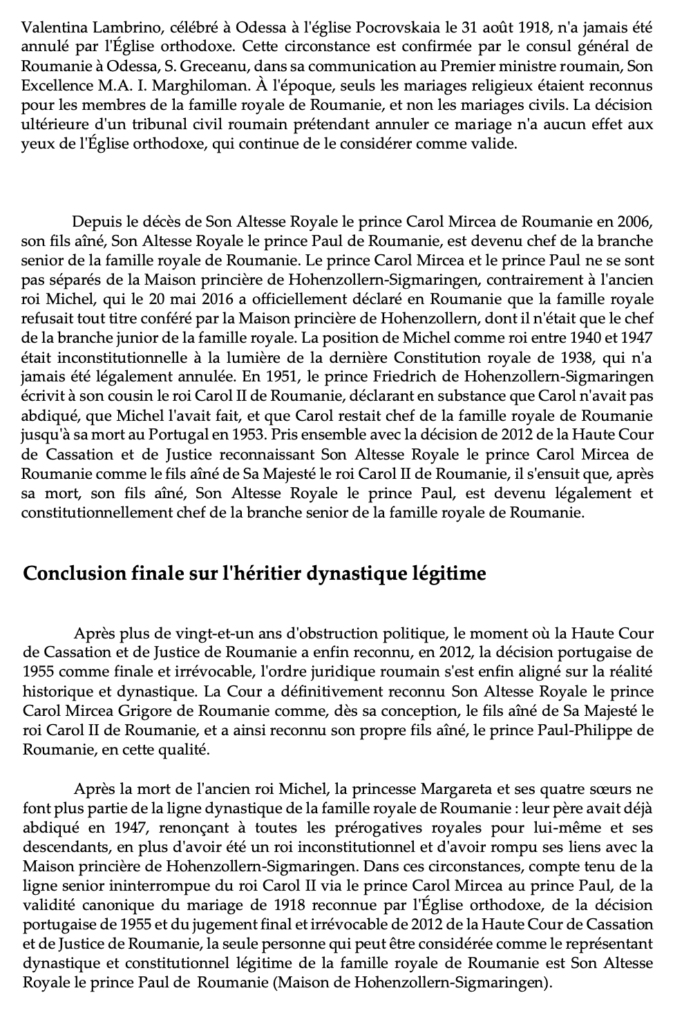
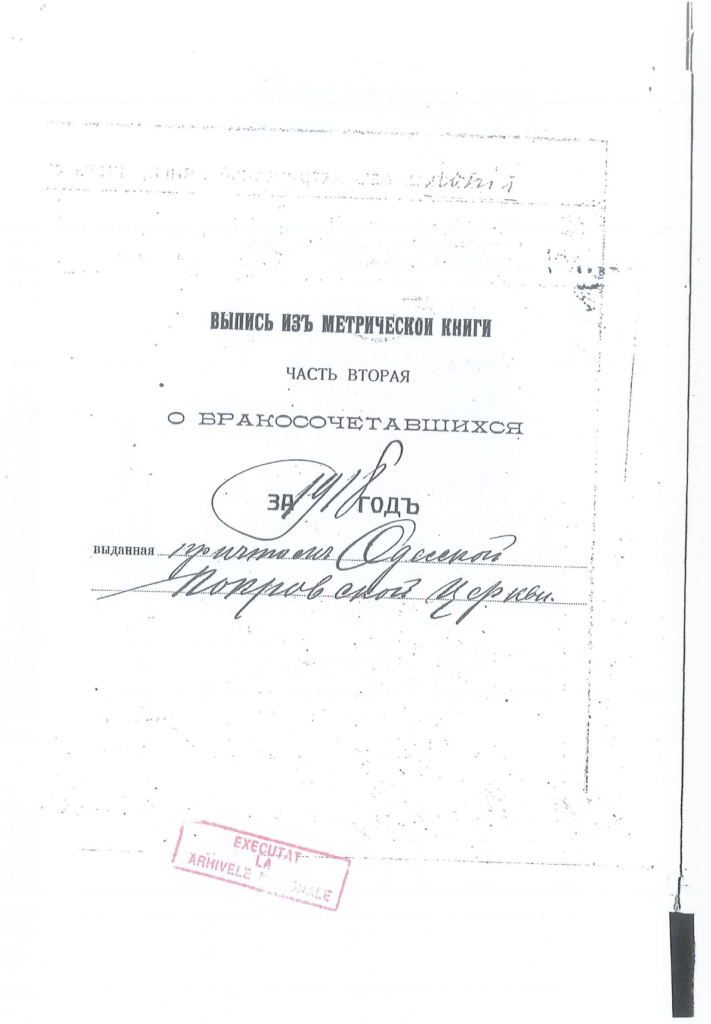
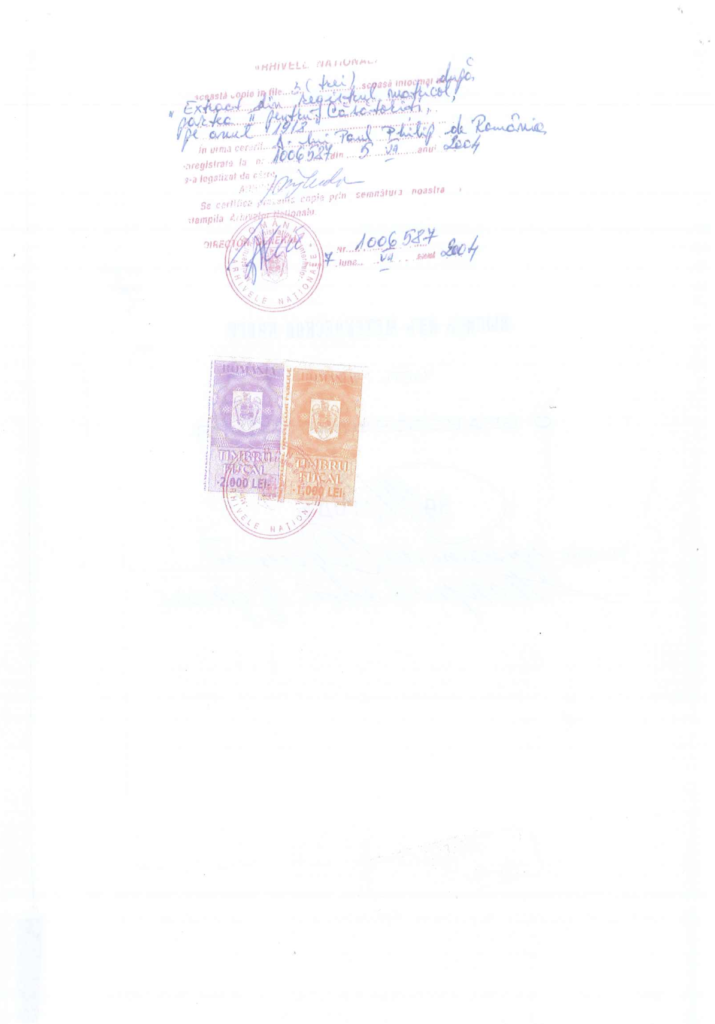
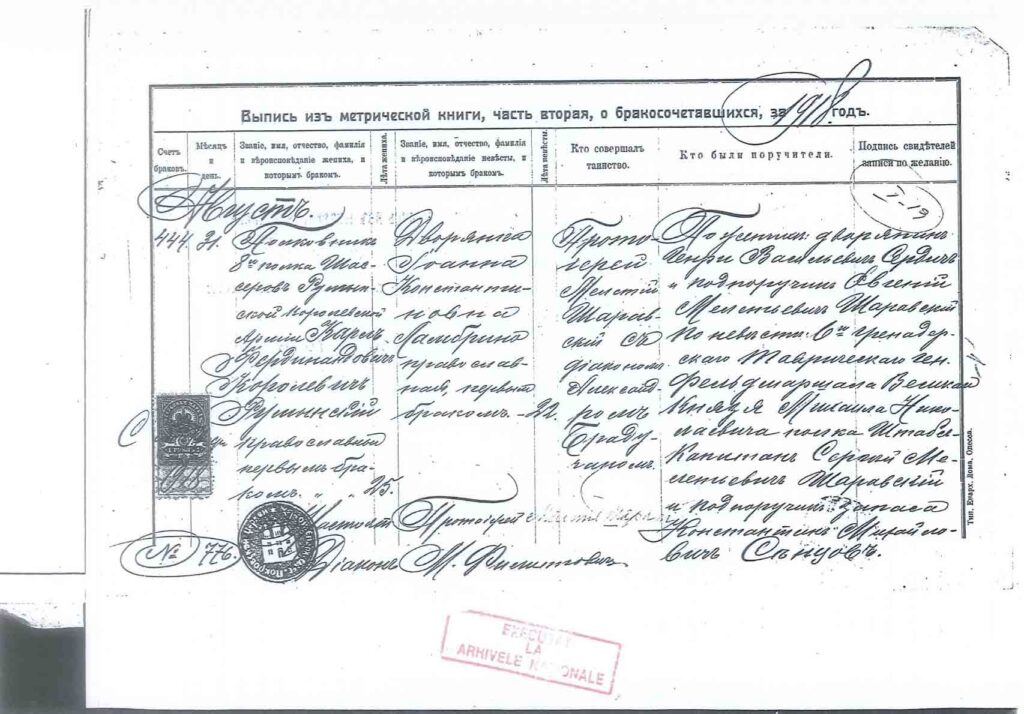
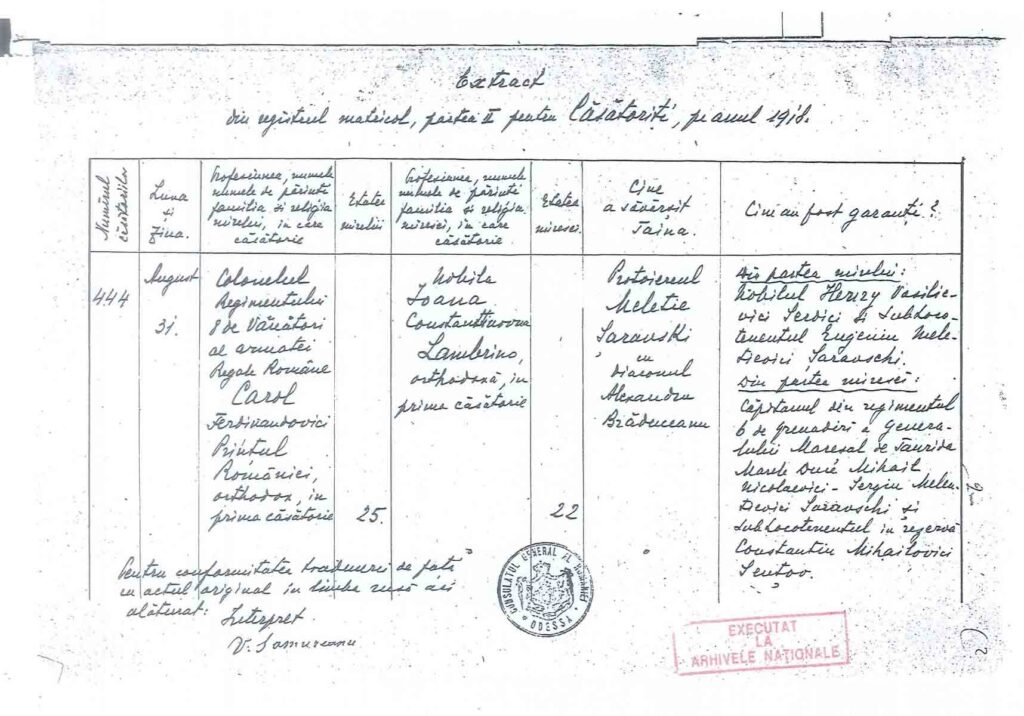
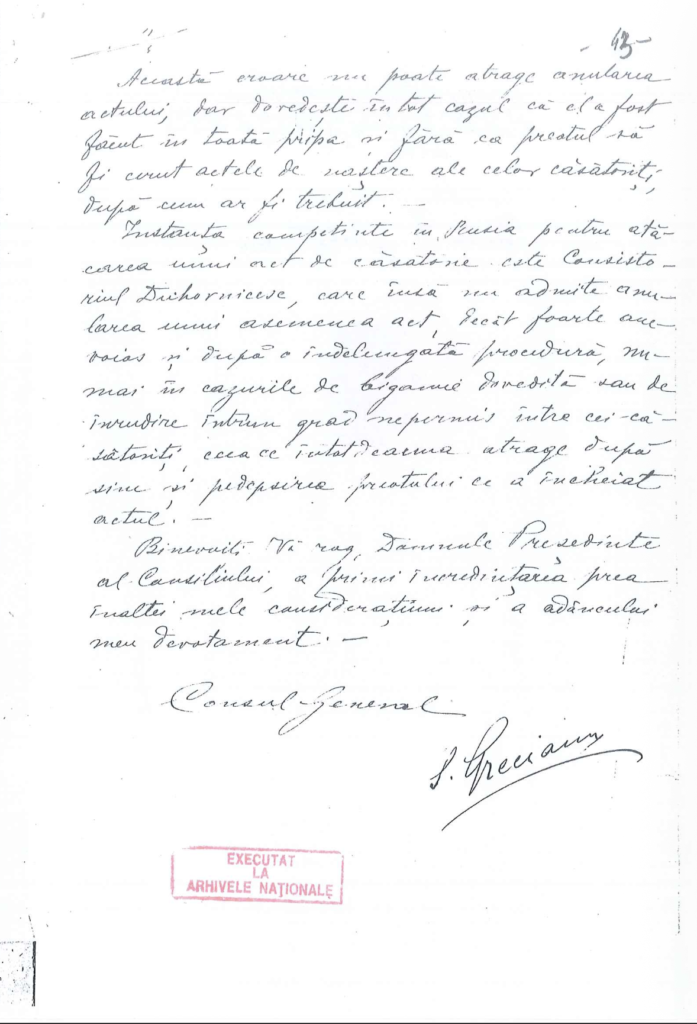
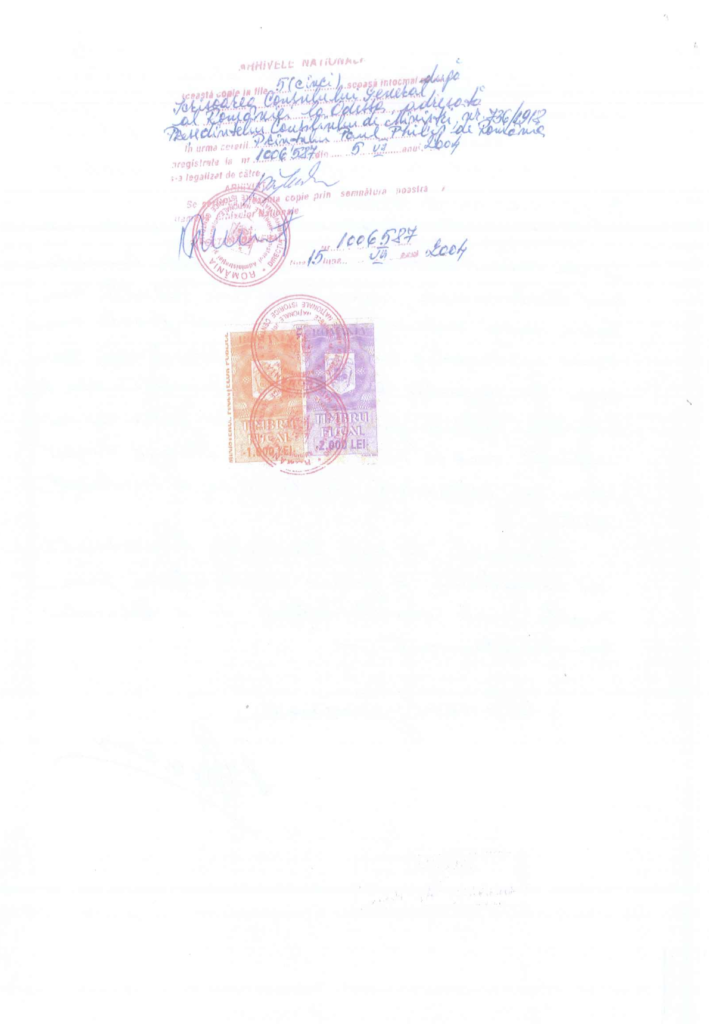
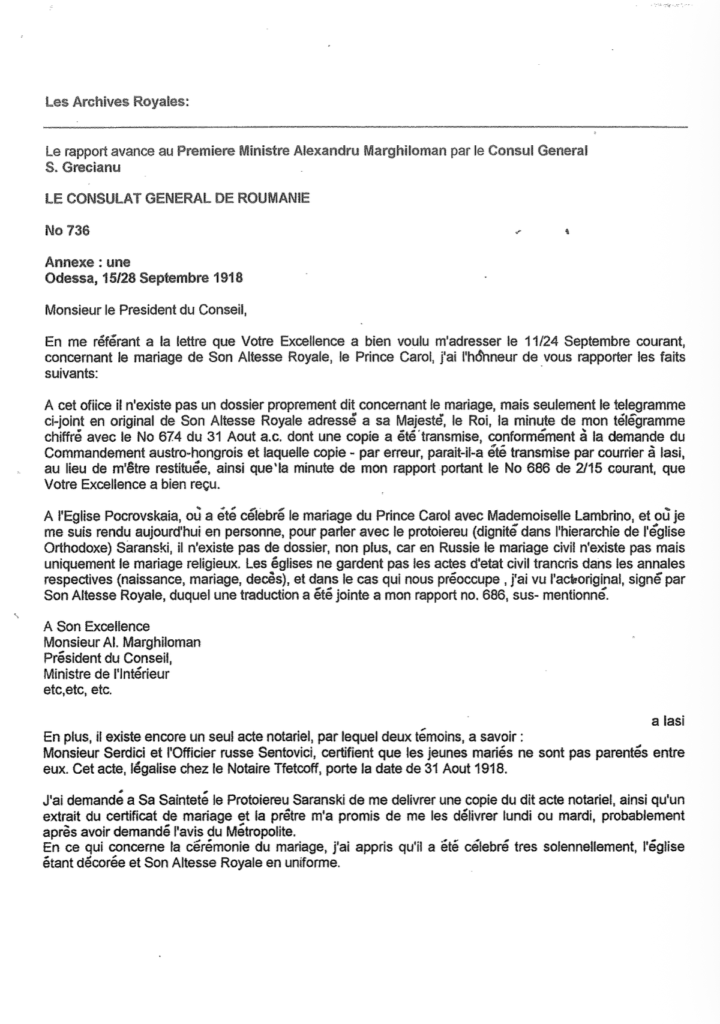
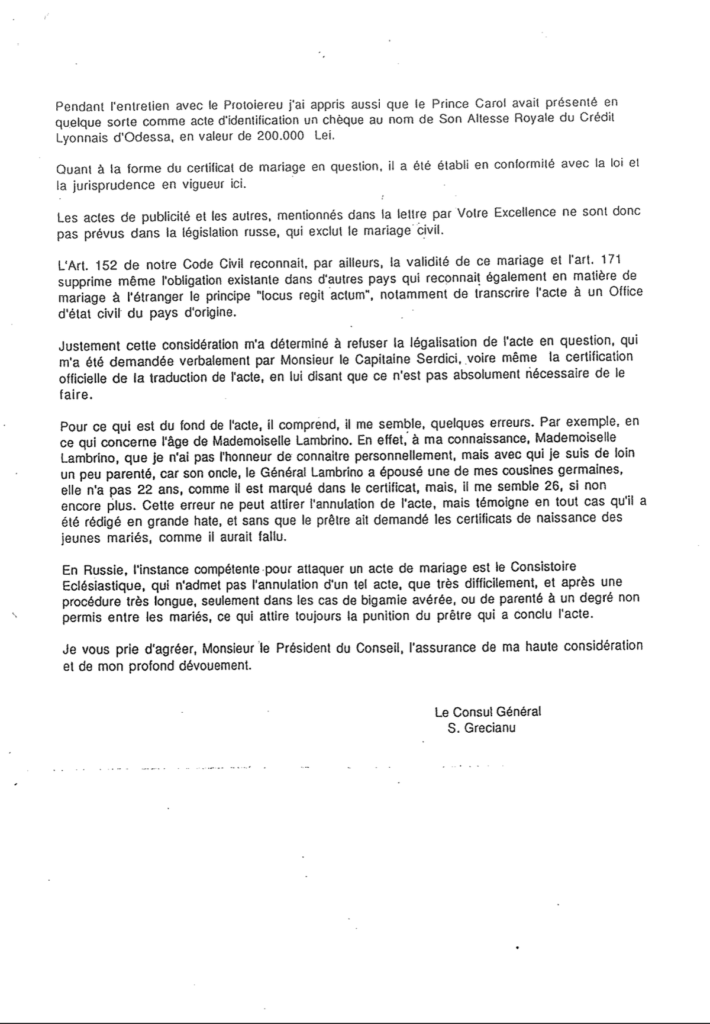
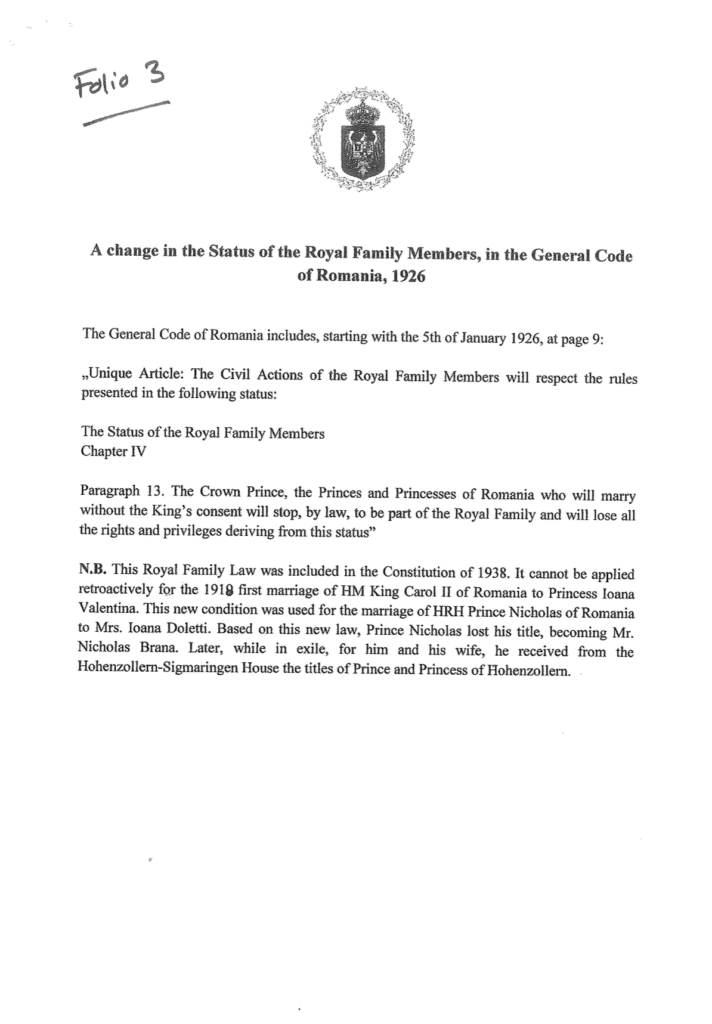
Official documents proving the validity of the first mariage of Prince Carol, Prince Paul of Romania’s grand-father
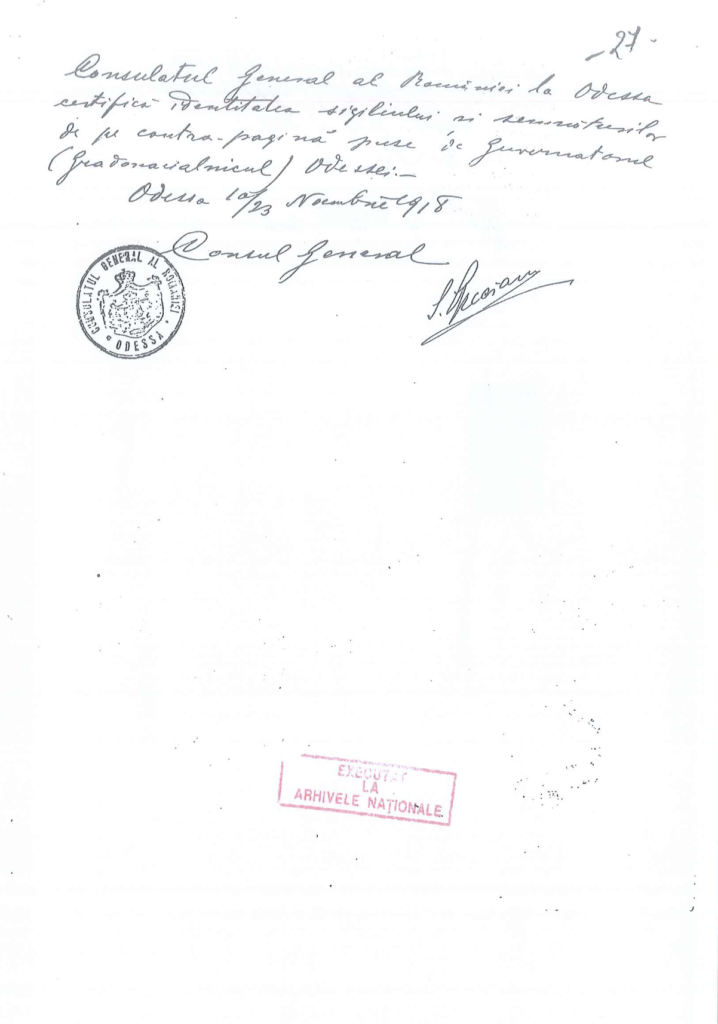
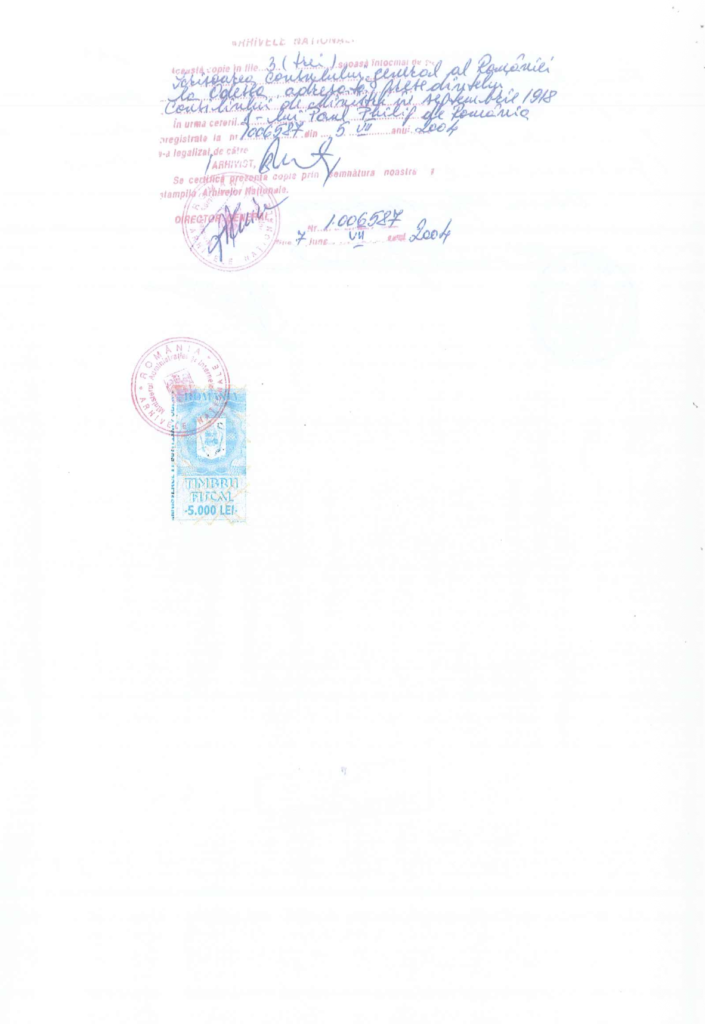
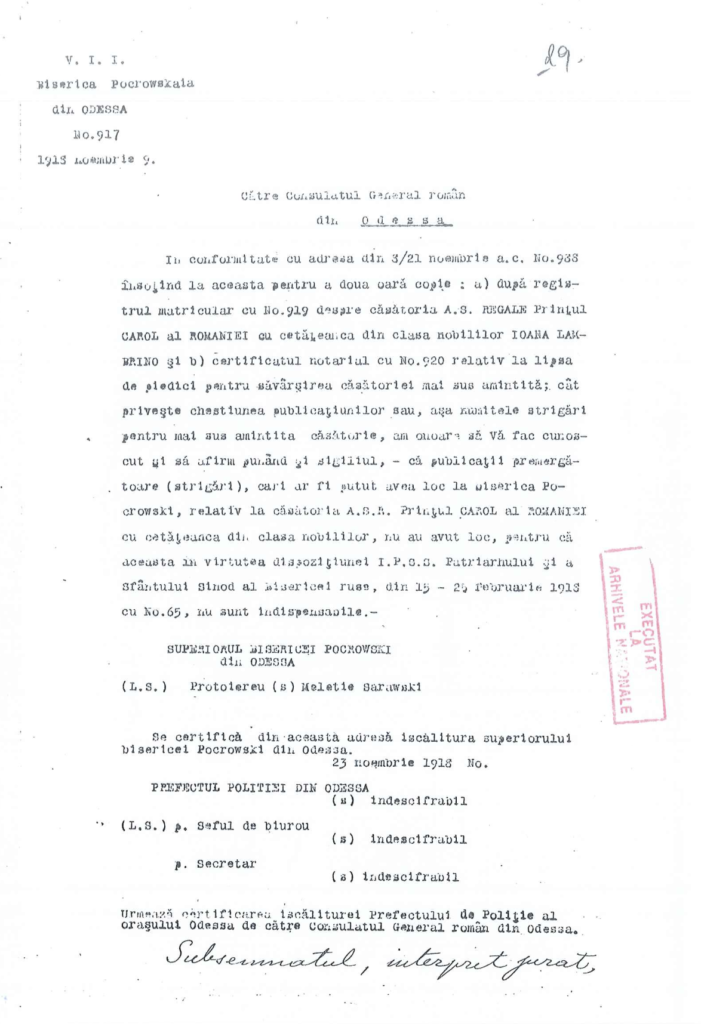
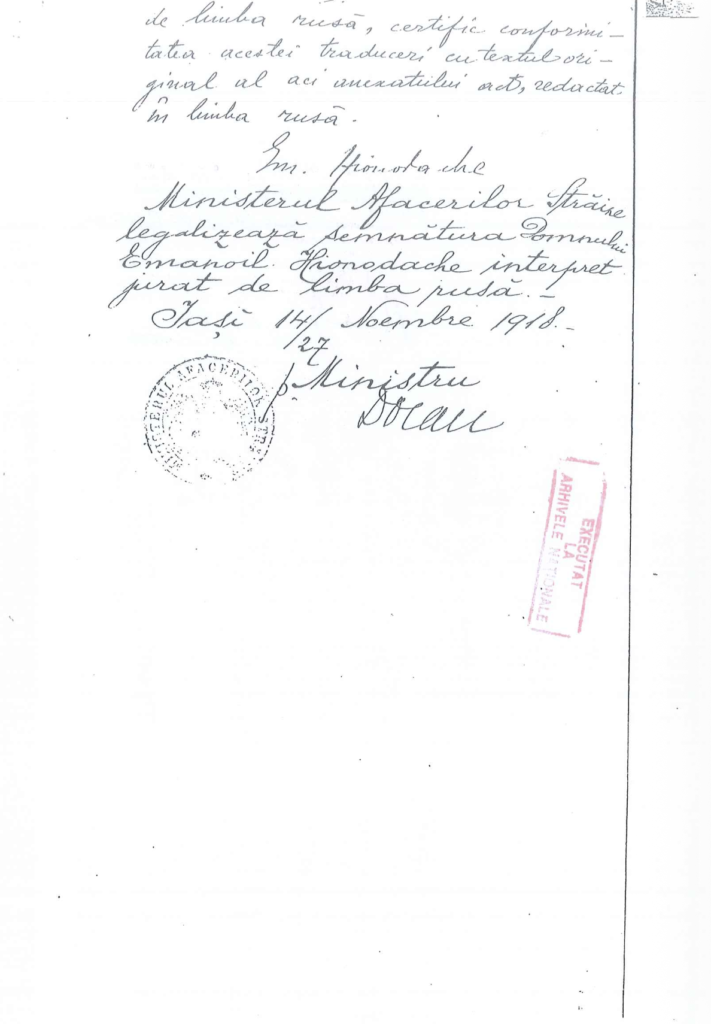
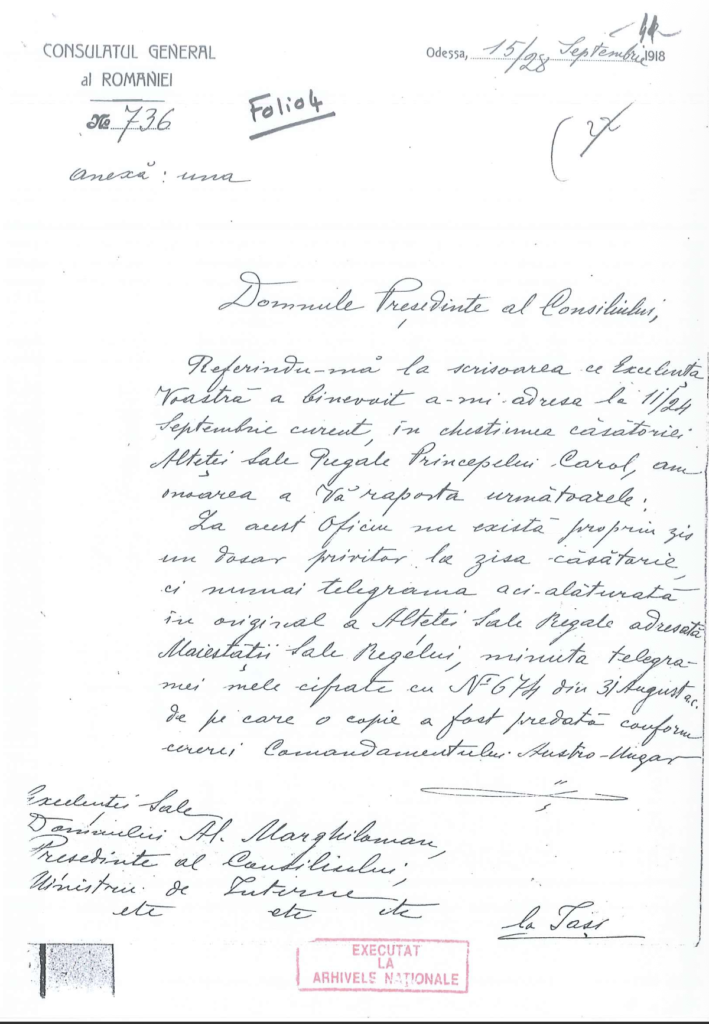
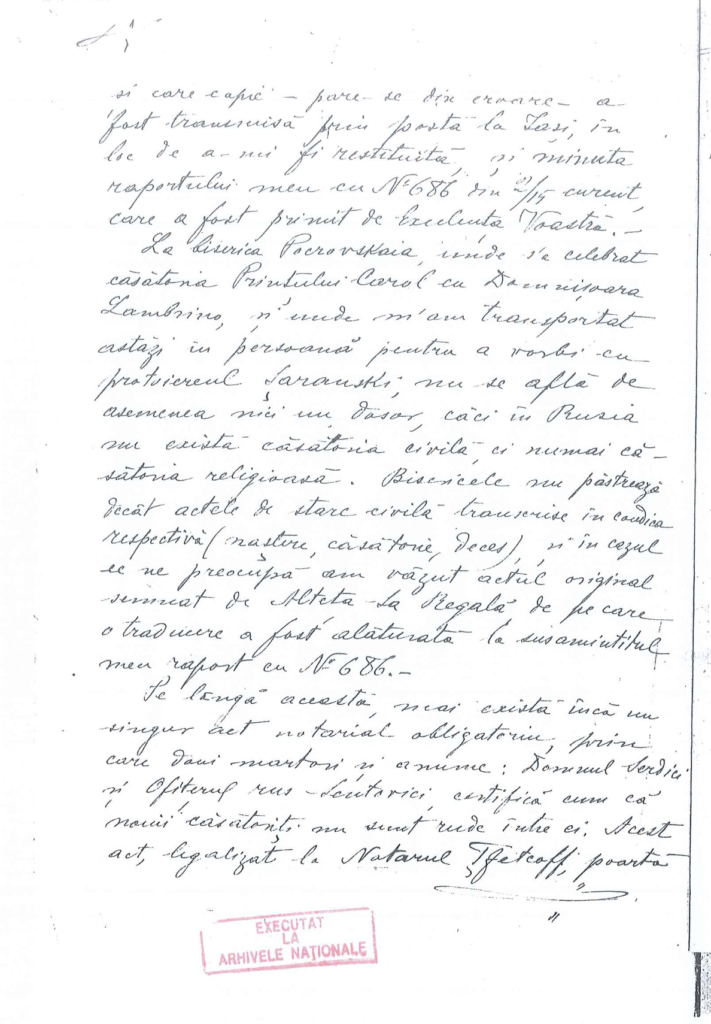
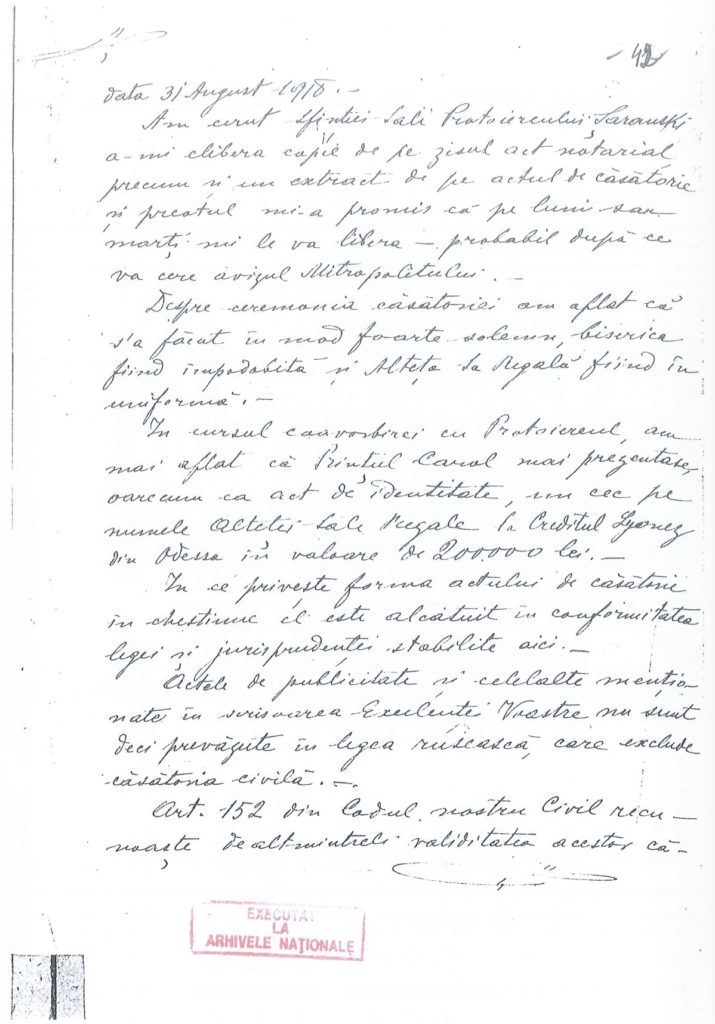
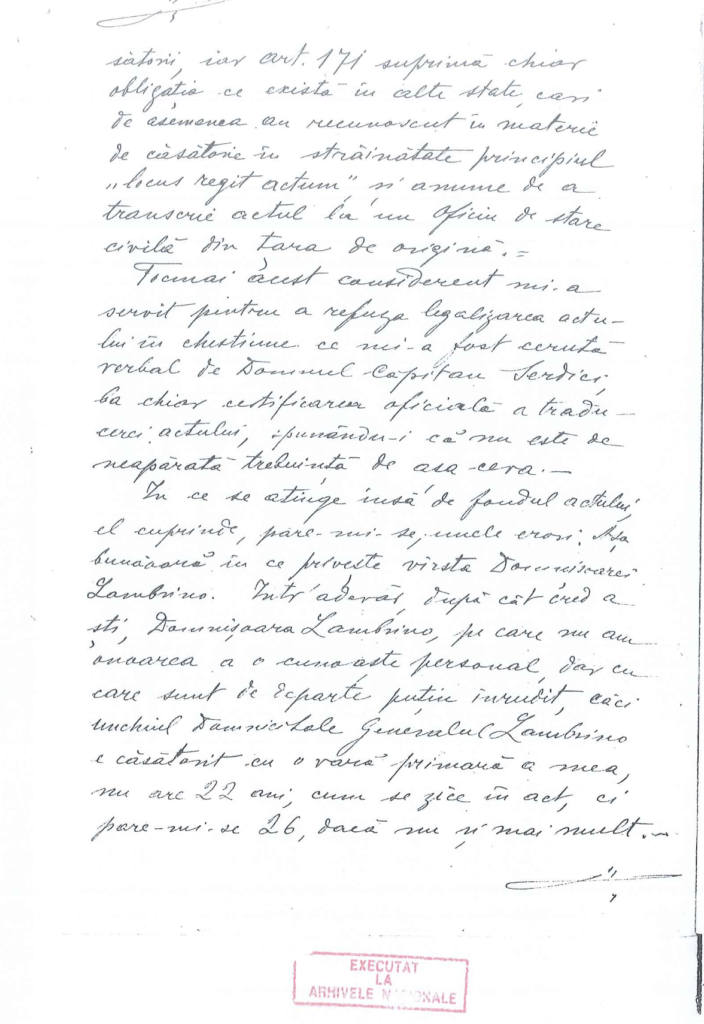
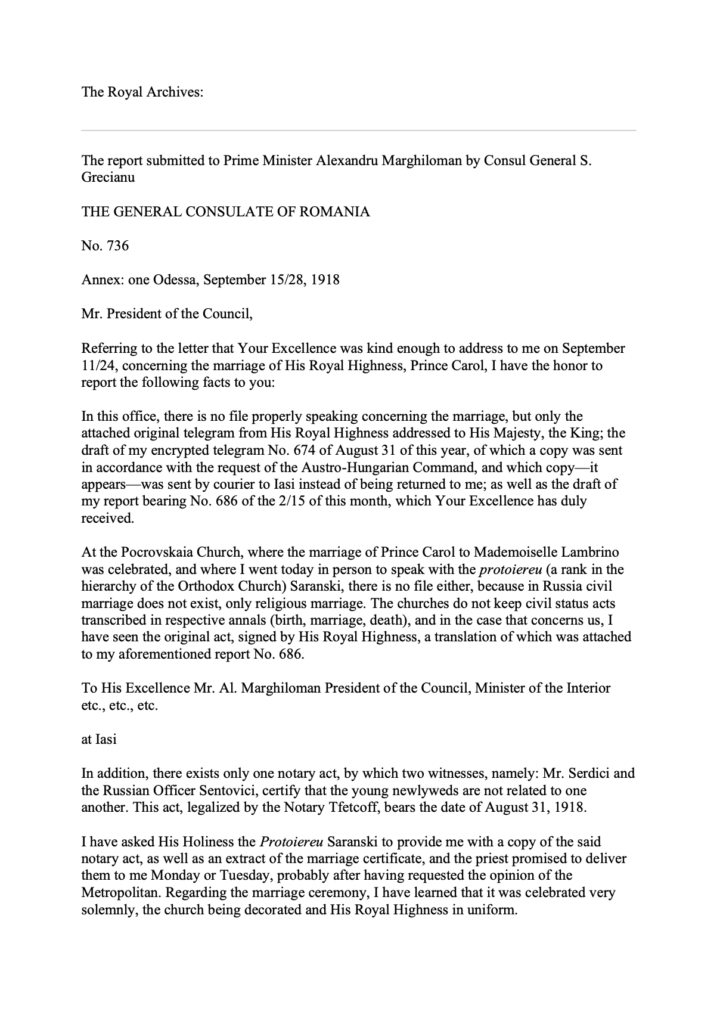
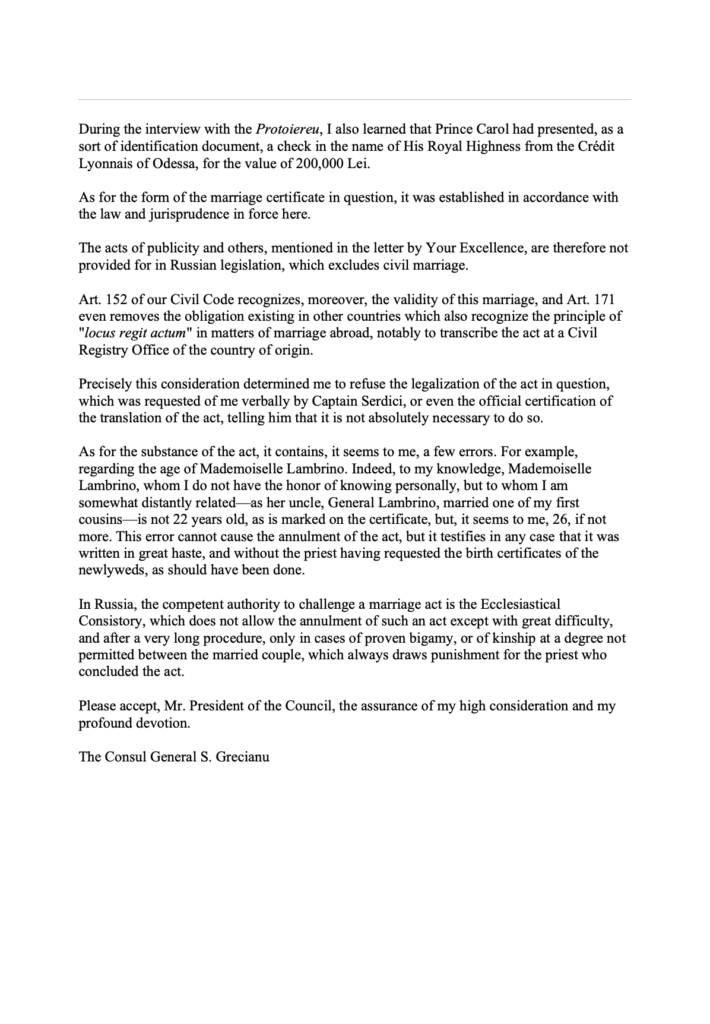
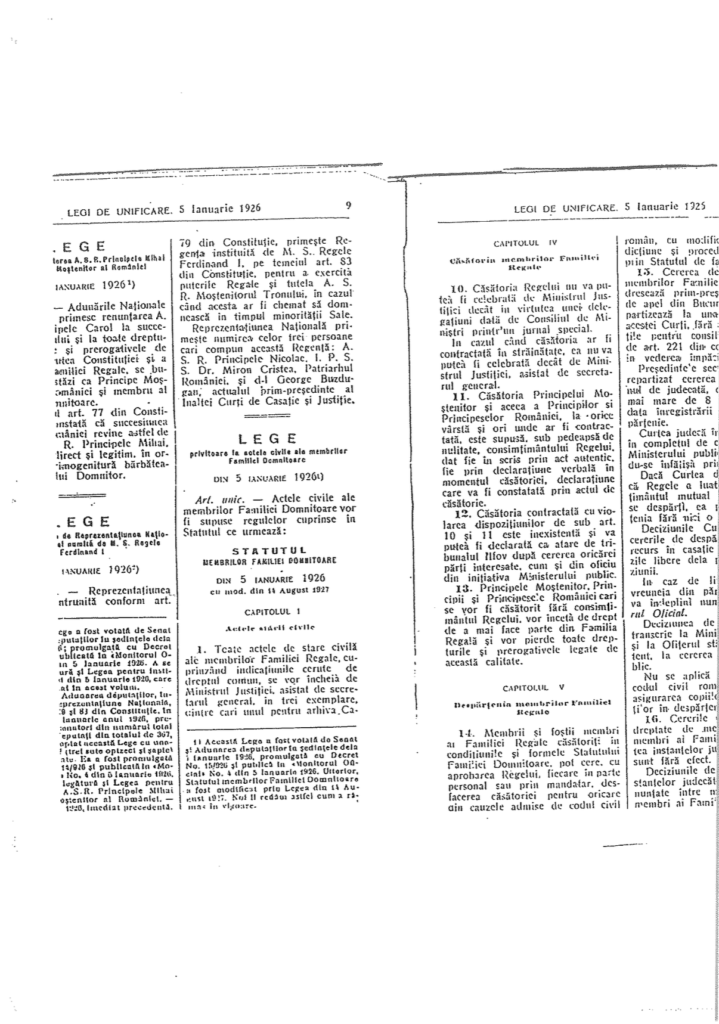
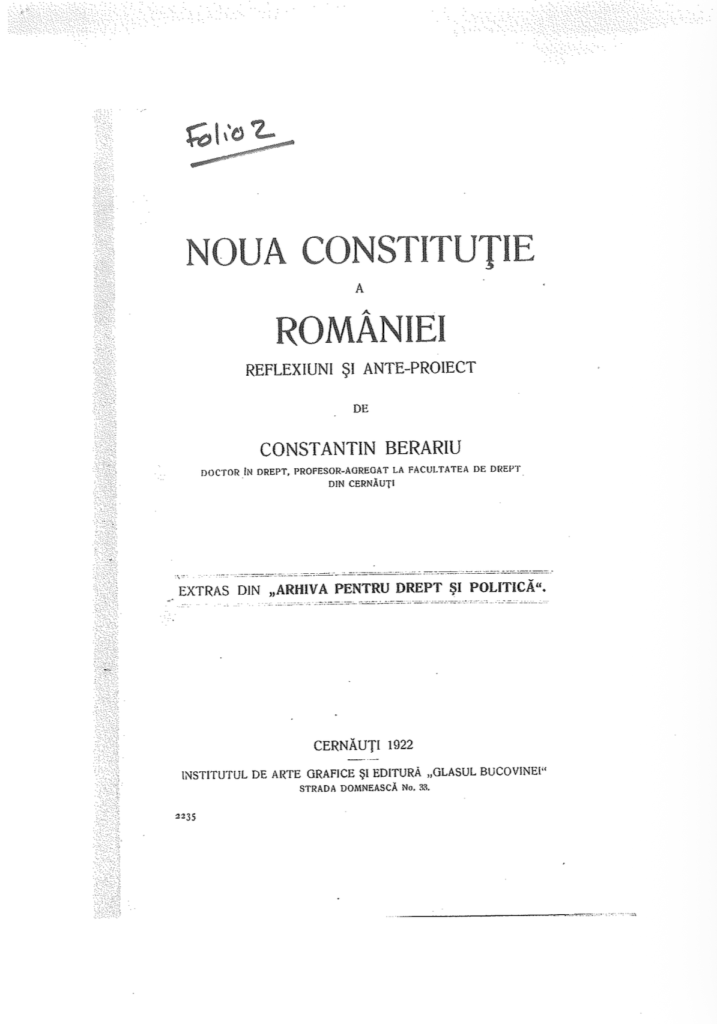
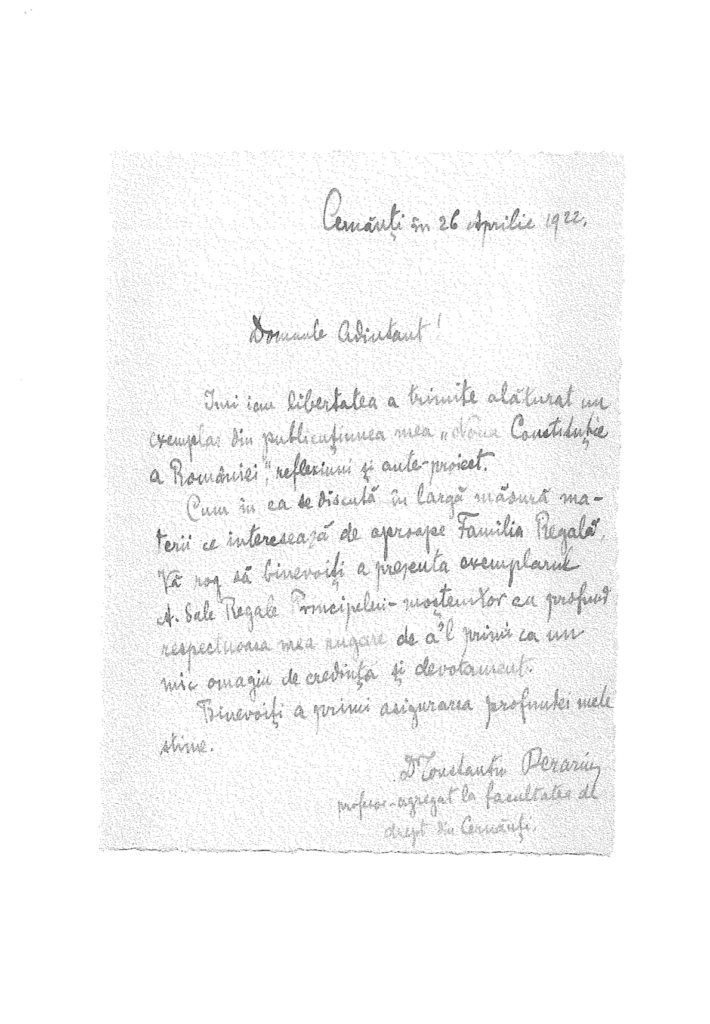
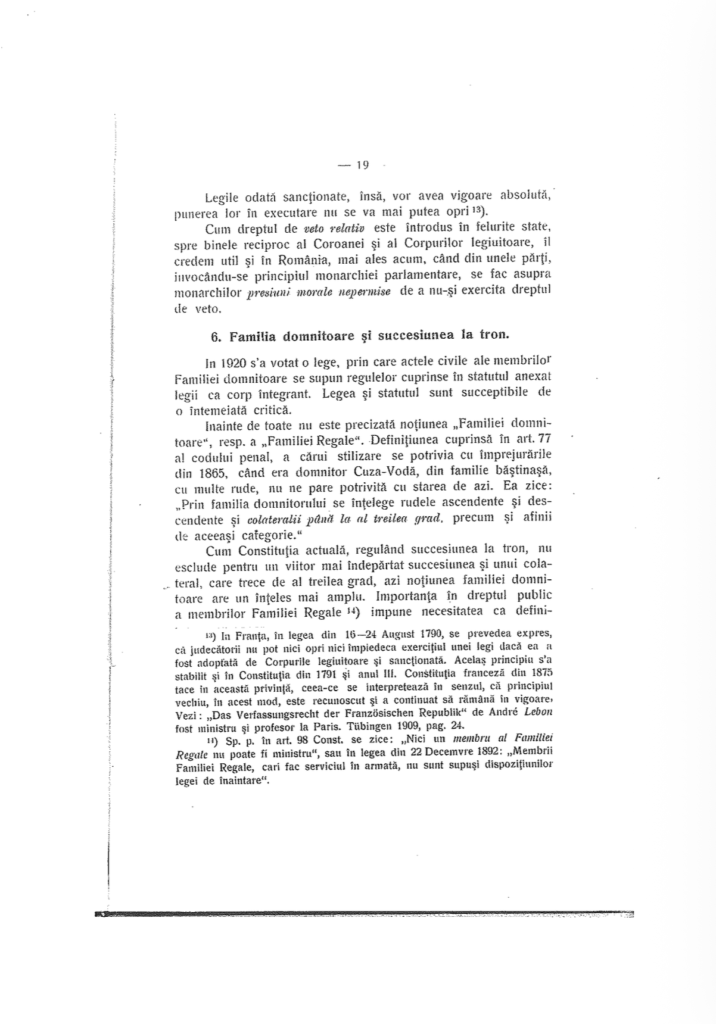
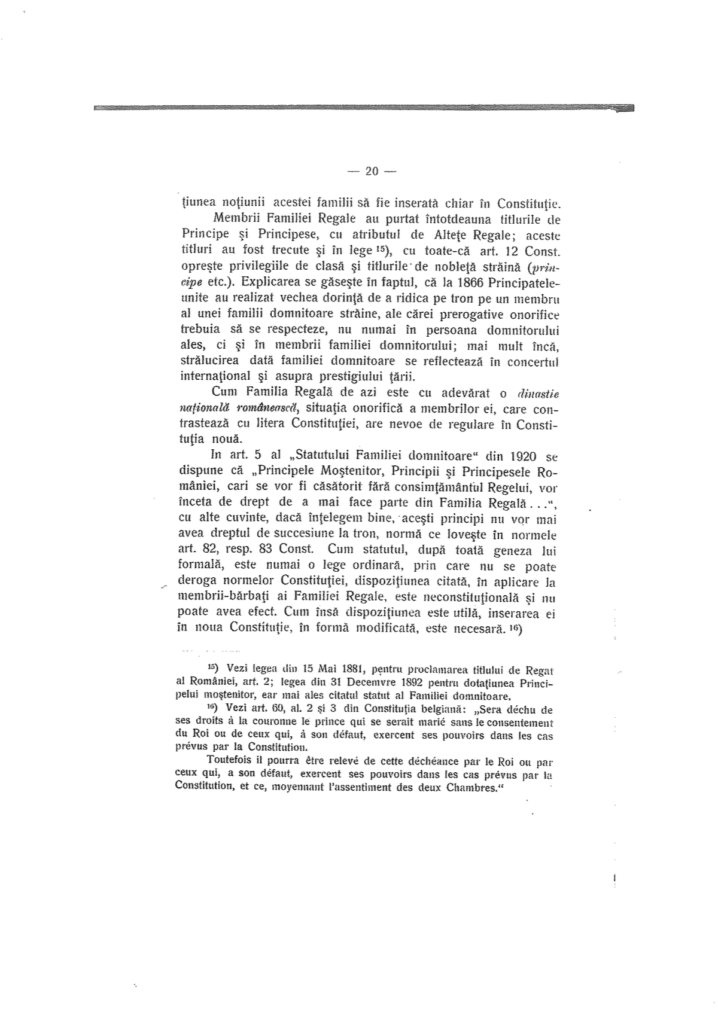
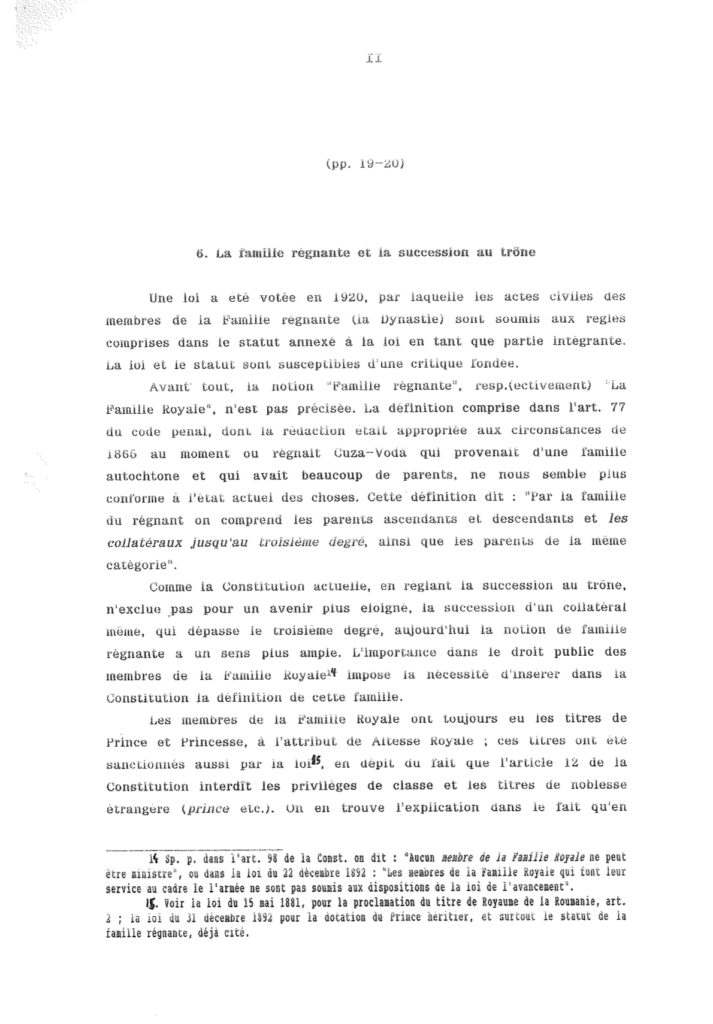
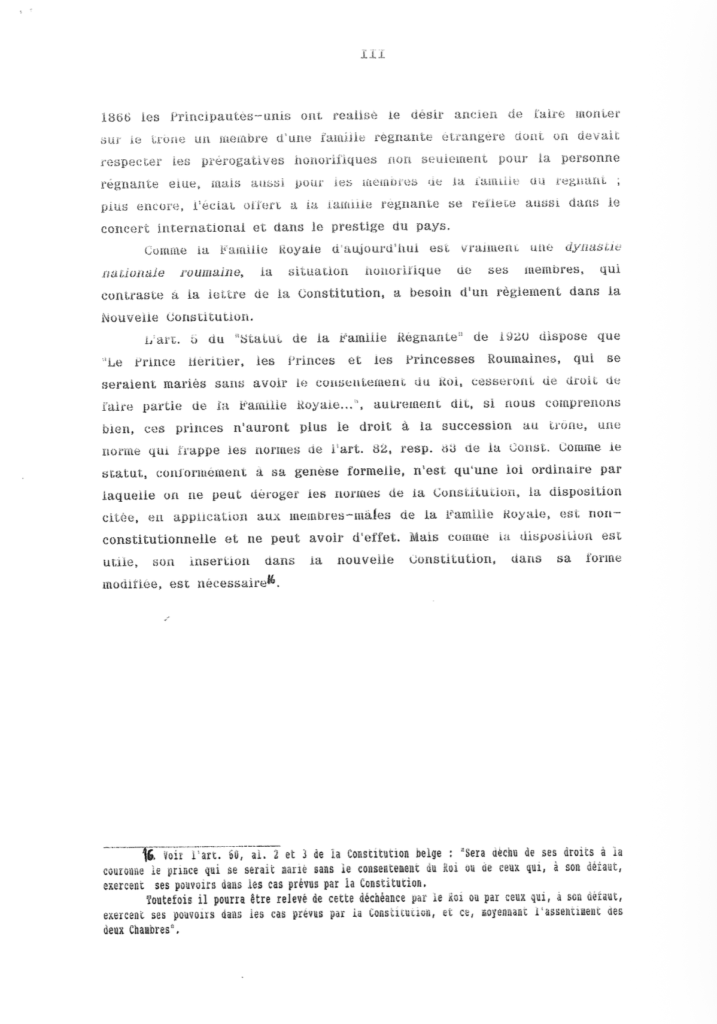
In 1920, in the Romanian newspaper Epoca, Prime Minister AlexandruVaida-Voevod, published a handwritten letter from Crown Prince Carol to his wife, Princess Iona Valentina, declaring that he was leaving for the Hungarian front to fight. In case anything should happen to him, he acknowledged his paternity of the unborn child. This letter was accompanied by a statement from the Prime Minister affirming that before God, the unborn child was indeed the child of Crown Prince Carol. The article was published on January 17, 1920, nine days after the birth of Prince Carol Mircea, father of Prince Paul of Romania. Thus, all of Romania in 1920 was aware of the prince’s birth.
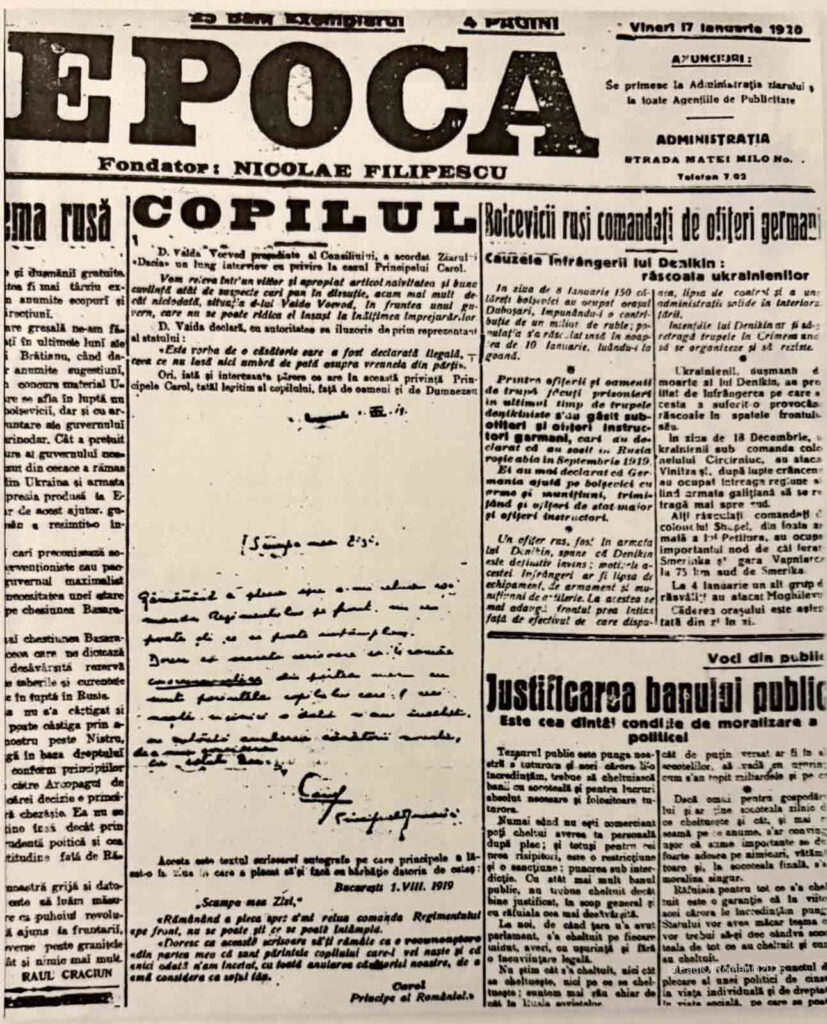
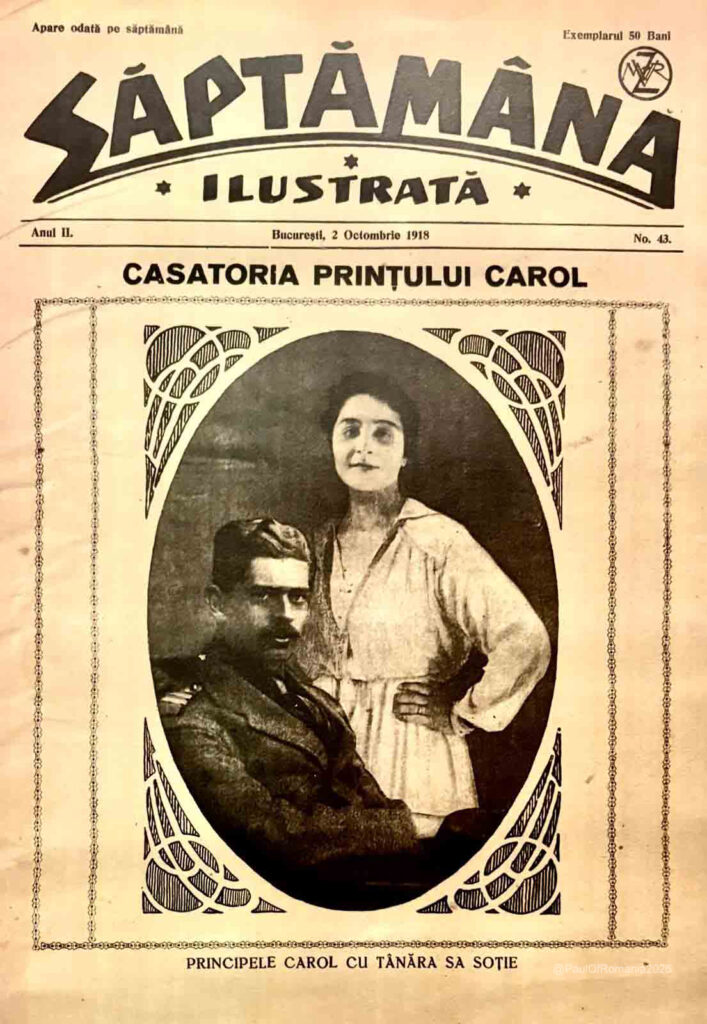
The Romanian and international press closely followed the beautiful love story between the Crown Prince of Romania and the aristocrat Iona Valentina Lambrino.
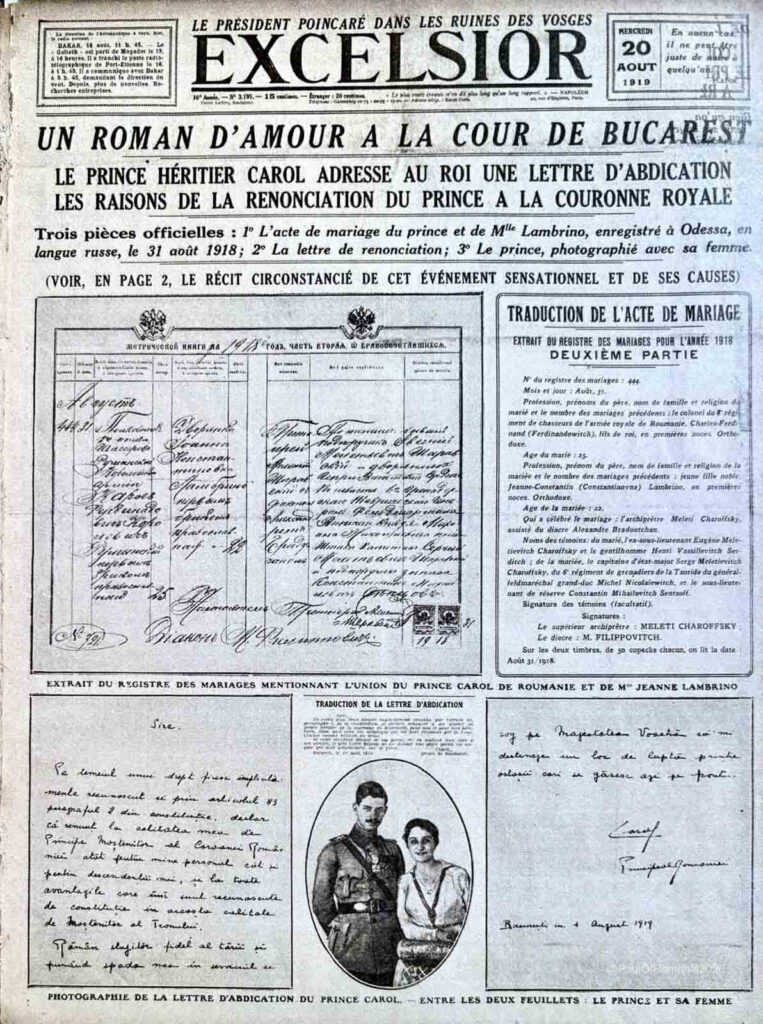
A British newspaper even published the marriage document in Russian signed by Crown Prince Carol and Iona Valentina Lambrino.
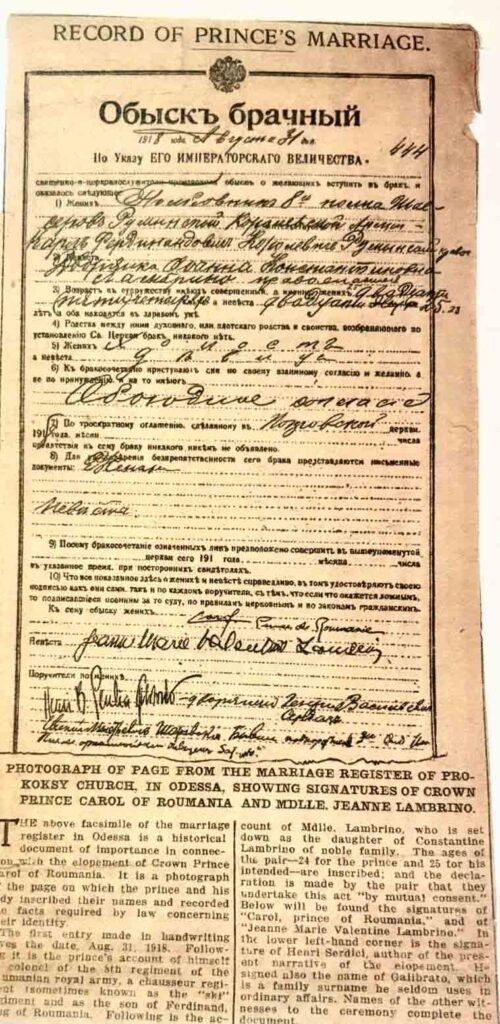
At the time of Crow Prince Carol’s son’s birth, thee press in Romania was divided on the legal status of the boy and the illegal measures taken later by the Romanian government to prevent Prince Carol to register his son according to the law. This was rectified in 2012 by the Romanian Court of Cassation .
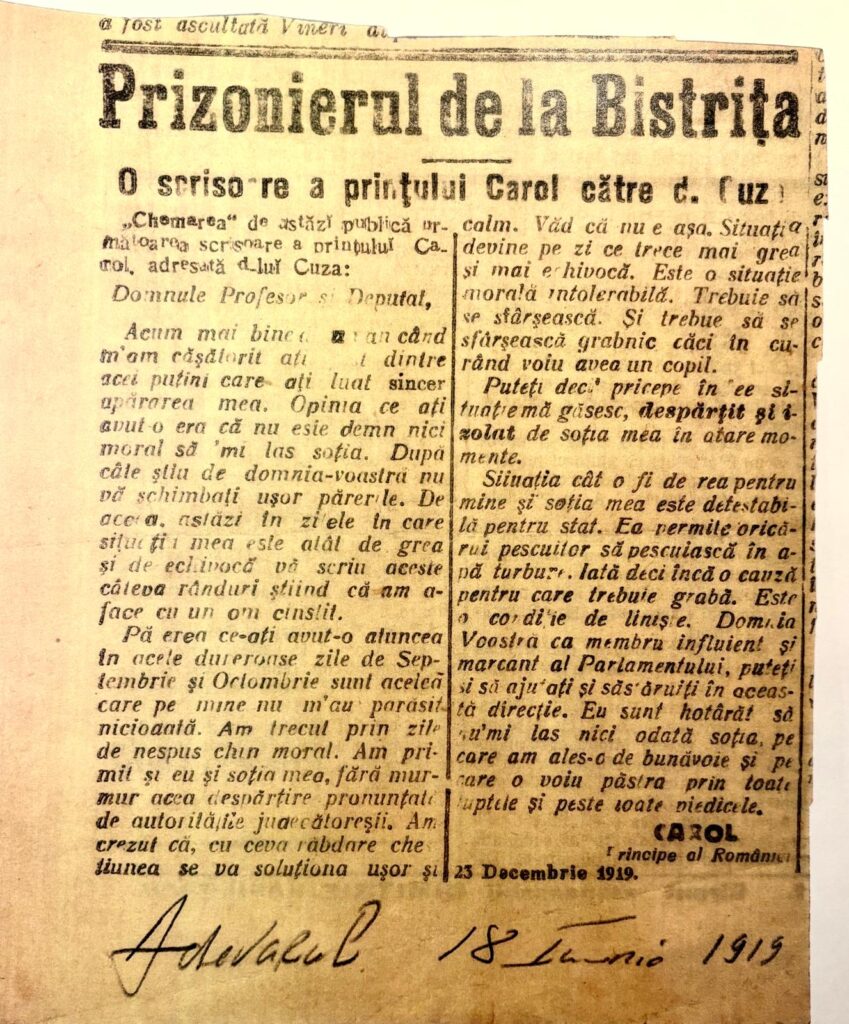
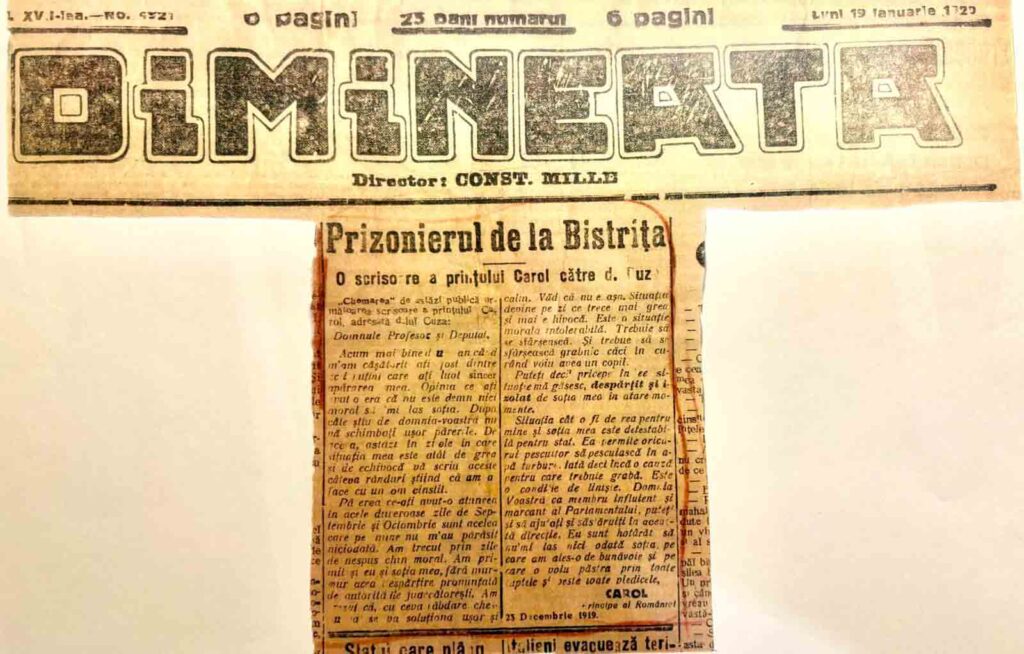
Document 1 & 3: The Prisoner of Bistrița
(Note: These are two captures of the same article: a letter from Prince Carol to Professor A.C. Cuza) – Published in Adevarul (18/1/1919) and Dimineata (19/1/1919)
Title: The Prisoner of Bistrița – A letter from Prince Carol to Mr. Cuza
“Today’s Chemarea publishes the following letter from Prince Carol, addressed to Mr. Cuza:
Honorable Professor and Deputy,
It has been more than a year since I married, and you were among the few who sincerely took my side. Your opinion was that it is not worthy nor moral for me to leave my wife. Knowing your character, I know you do not change your views easily. Therefore, today, in days when my situation is so difficult and equivocal, I write these few lines knowing I am dealing with an honest man.*
The opinion you held then, in those painful days of September and October, are the same ones that have never left me. I have passed through days of untold moral torment. My wife and I have both received, without complaint, this separation pronounced by judicial authorities. I believed that with patience the matter would be resolved easily and calmly. I see that is not so. The situation becomes more difficult and equivocal by the day. It is an intolerable moral situation. It must end. And it must end quickly because I will soon have a child.
You can therefore understand the situation I find myself in, separated and isolated from my wife in such a moment. The situation, as bad as it is for me and my wife, is detestable for the state. It allows any ‘fisher in muddy waters’ to fish. Here is another reason why things must be hurried. A state of peace is needed. Your Excellency, as an influential and prominent member of Parliament, can help and provide support in this direction. I am determined never to leave the wife I chose of my own free will and whom I will keep through all struggles and over all obstacles.
CAROL, Prince of Romania December 23, 1919″
Document 2 : The Sequestration of Prince Carol
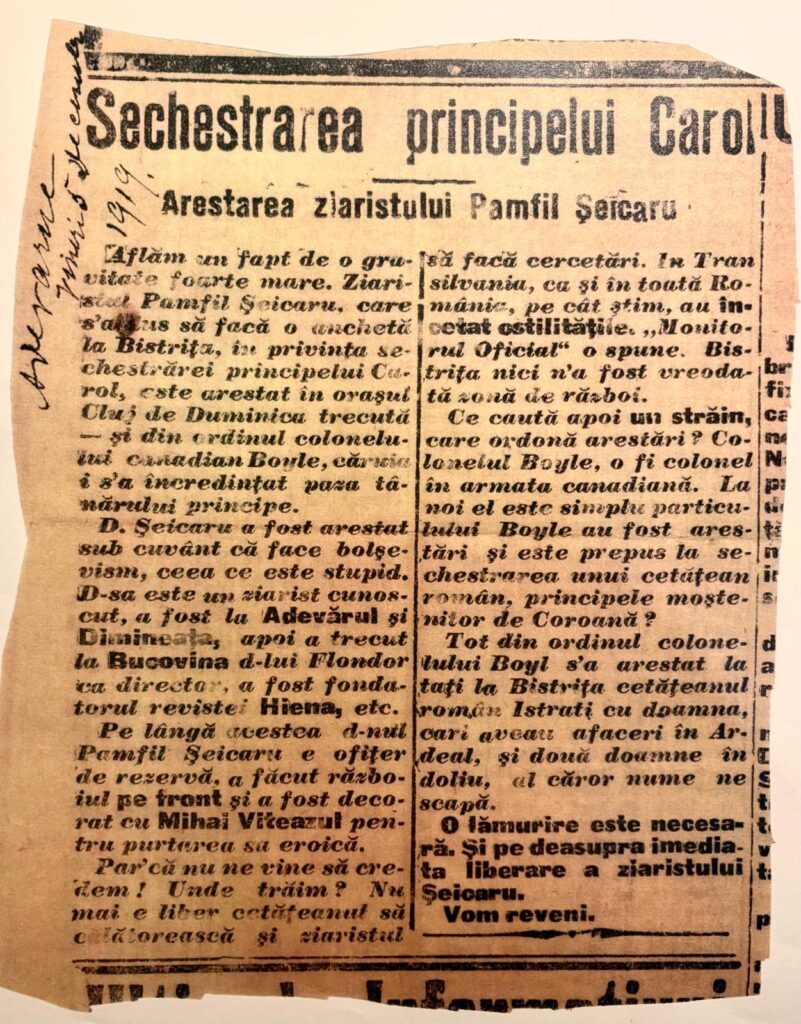
(Note: Famous Romanian journalist Seicaru was arrested following his interview with crown prince Carol))
Title: The Sequestration of Prince Carol – The Arrest of Journalist Pamfil Șeicaru
“We learn of a very grave fact. The journalist Pamfil Șeicaru, who went to conduct an inquiry at Bistrița regarding the sequestration of Prince Carol, was arrested in the city of Cluj last Sunday by order of the Canadian Colonel Boyle, to whom the guarding of the young prince was entrusted.*
Mr. Șeicaru was arrested on the grounds that he ‘is practicing Bolshevism,’ which is stupid. He is a well-known journalist, formerly at ‘Adevărul’ and ‘Dimineața’… Furthermore, Mr. Pamfil Șeicaru is a reserve officer, fought on the front, and was decorated with ‘Mihai Viteazul’ for his heroic conduct.
We can hardly believe it! Where do we live? Is a citizen no longer free to travel and a journalist to conduct inquiries? In Transylvania, as in all of Romania, as far as we know, hostilities have ceased. ‘Monitorul Oficial’ says so. Bistrița was never a war zone.
What is a foreigner doing ordering arrests here? Who is Colonel Boyle? He may be a colonel in the Canadian army. Here, he is a simple private citizen. Under Boyle’s orders, arrests have been made and he is suspected of the sequestration of a Romanian citizen, the Heir Prince of the Crown? Also by order of Colonel Boyle, the Romanian citizen Istrati and his wife were arrested at Bistrița… A clarification is necessary. And above all, the immediate release of journalist Șeicaru. We will return.”
Document 5: The Marriage of Prince Carol
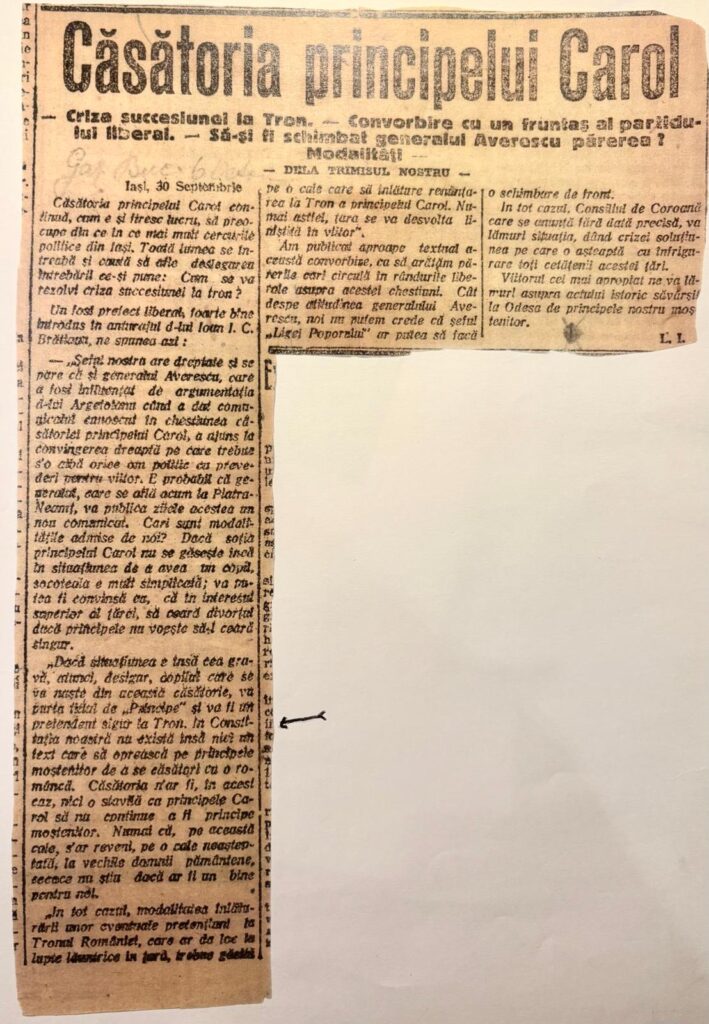
Title: The Marriage of Prince Carol – The Succession Crisis to the Throne
“Iași, September 30: The marriage of Prince Carol continues, as is natural, to preoccupy the political circles in Iași more and more. Everyone is asking and trying to find the resolution: How will the succession crisis to the throne be resolved?*
A former liberal prefect, very well-introduced to the entourage of Mr. Ion I.C. Brătianu, told us today: ‘Our leader is right and it seems General Averescu, who was influenced by the arguments of Mr. Argetoianu… has reached the right conviction that every politician with foresight for the future must have. It is probable that the general… will publish a communiqué these days. What are the methods allowed to us? If the wife of Prince Carol does not yet find herself in the position to have a child, the calculation is simplified; she could be convinced that, in the superior interest of the country, she should seek a divorce if the Prince does not wish to seek it himself.’
‘However, if the situation is grave, then certainly the child born of this marriage will bear the title of ‘Prince’ and will be a certain pretender to the Throne. In our Constitution, there is no text that forbids the Heir Prince from marrying a Romanian woman. The marriage would not, in this case, be an obstacle for Prince Carol to continue being the Heir Prince…’
In any case, the method of eliminating eventual pretensions to the Romanian Throne, which would lead to internal struggles in the country, must be found.”
Document 6: The King’s Grandson
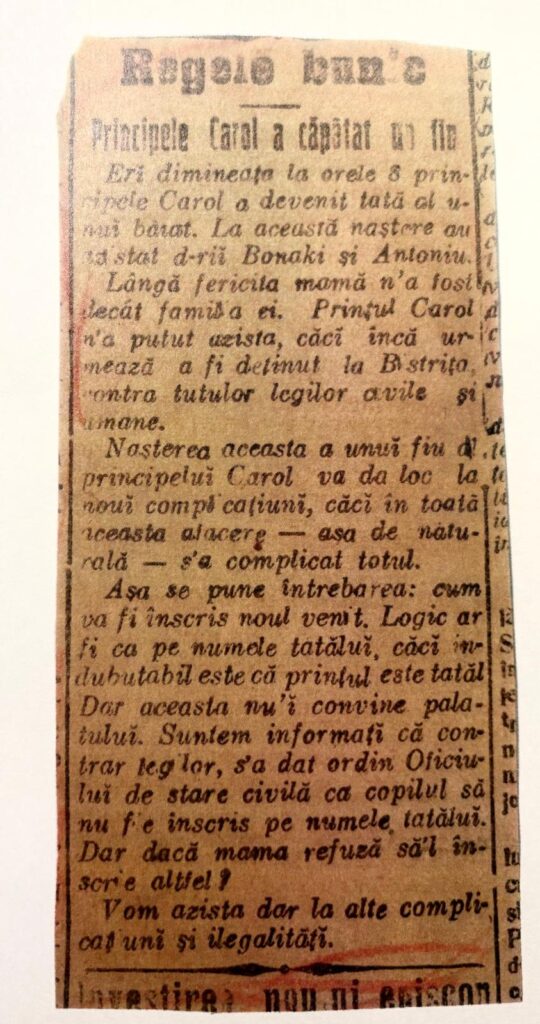
Title: The Good King – Prince Carol has a Son
“Yesterday morning at 8 o’clock, Prince Carol became the father of a boy. At this birth, Messrs. Bonaki and Antoniu were present. Near the happy mother was only her family. Prince Carol could not assist, as he is still being held at Bistrița, against all civil and human laws.*
The birth of this son to Prince Carol will lead to new complications, because in this whole affair—so natural—everything has become complicated.
So the question is asked: how will the newcomer be registered? Logic would dictate it be under the father’s name, for it is indubitable that the Prince is the father. But this does not suit the Palace. We are informed that, contrary to the laws, an order was given to the Civil Status Office that the child should NOT be registered under the father’s name. But if the mother refuses to register him otherwise? We will witness further complications and illegalities.”
Document 7: The Statute of the Royal House
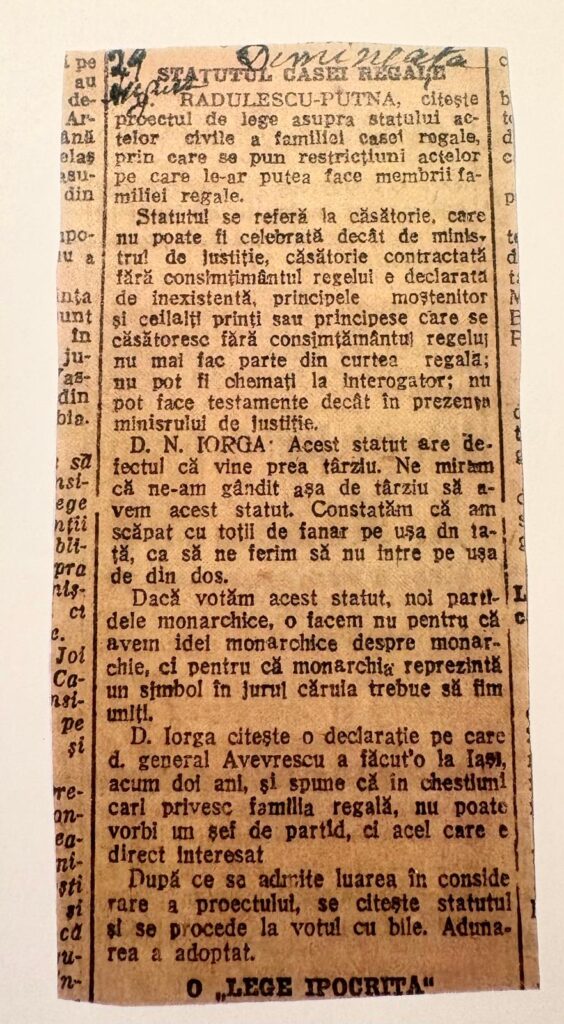
Title: The Statute of the Royal House
“Mr. Rădulescu-Putna reads the draft law regarding the civil status of the members of the Royal House, through which restrictions are placed on the acts that members of the royal family can perform.*
The Statute refers to marriage, which can only be celebrated by the Minister of Justice; a marriage contracted without the King’s consent is declared non-existent; the Heir Prince and other princes or princesses who marry without the King’s consent no longer belong to the Royal Court; they cannot be called for interrogation; they can only make wills in the presence of the Minister of Justice.
D. N. IORGA: ‘This statute has the defect of coming too late. We wonder why we thought of having this statute so late…’
‘If we vote for this statute, we, the monarchist parties, do so not because we have monarchical ideals about monarchy, but because the monarchy represents a symbol around which we must be united.’
Mr. Iorga reads a declaration that General Averescu made at Iași two years ago, stating that in matters concerning the Royal Family, a party leader cannot speak, but only the one who is directly interested.
After the consideration of the project is admitted, the statute is read and the vote by ballot proceeds. The Assembly has adopted it.
A ‘HYPOCRITICAL LAW’”
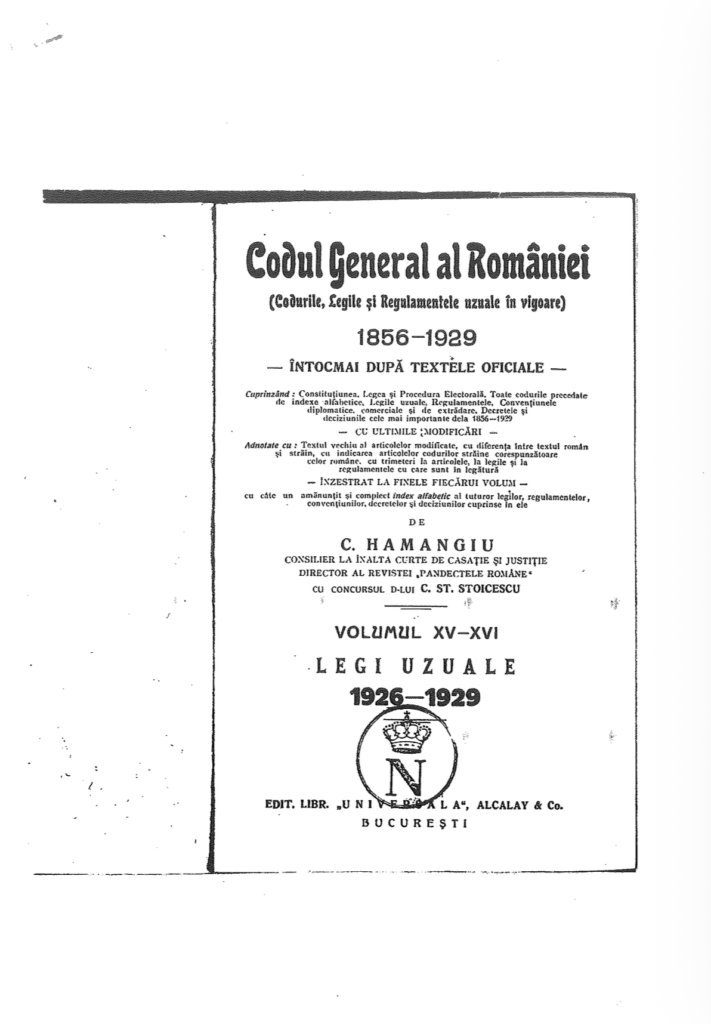
(comments : the law was changed for royal mariages in 1925 in the Code Civil and then integrated in the 1938 Constitution promulgated by King Carol II . This law was used against Prince Nicolae of Romania to prevent him from marrying Romanian Ioana Doletti)
•
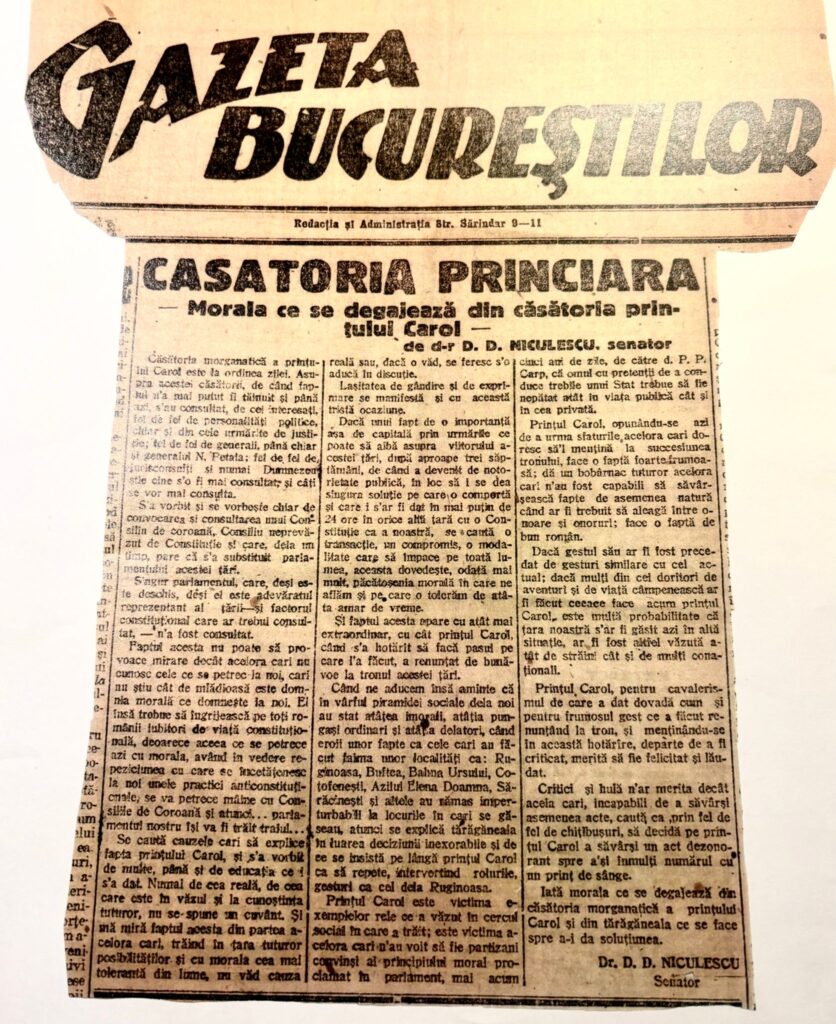
Gazeta Bucureștilor concerning the marriage of Prince Carol (the future King Carol II) to Zizi Lambrino.
THE PRINCELY MARRIAGE
— The morality emerging from Prince Carol’s marriage —
by Dr. D. D. NICULESCU, Senator
Prince Carol’s morganatic marriage is the order of the day. Regarding this marriage, since the fact could no longer be hidden and until today, political personalities of all kinds have been consulted, as have legal experts, and only God knows who else will be consulted and how many more will be consulted.
There is even talk of convening and consulting a Crown Council, a council not provided for by the Constitution and which, for some time now, seems to have substituted for the parliament of this country. Only the parliament, which is—though open—the true representative of the country and the constitutional factor, should have been consulted, but it was not.
This fact can only surprise those who do not know what is happening here, who do not know how much moral flexibility reigns among us. It must, however, worry all Romanians who love constitutional life, because what is happening today with morality—considering the ease with which some unconstitutional practices are becoming established here—will happen tomorrow with the Crown Council, and then… our parliament will have lived its life…
Causes are being sought to explain Prince Carol’s act, and much will be said, even about the education he was given. But of the real cause, which is in everyone’s sight and knowledge, not a word is said. And I am surprised by this from those who, living in the midst of all possibilities and with the most tolerant morality in the world, do not see the real cause or, if they see it, are naturally afraid to bring it up for discussion.
The cowardice of thought and expression manifests itself on this sad occasion as well. If a fact of such capital importance through its consequences—which it may have on the country’s future—has lasted for almost three weeks since it became public notoriety, instead of a solution being given, which is the only one it admits and which would have been given in any other country with a Constitution like ours in less than 24 hours, they seek a transaction, a compromise, a modality that reconciles—in my view, this proves, once more, the moral wretchedness in which we find ourselves and which we tolerate for so long.
And this fact appears even more extraordinary since Prince Carol, when he decided to take the step he took, voluntarily renounced the throne of this country.
When we remember that at the peak of the social pyramid here, there have been so many immoral acts, so many wrongdoings and so many informers, who became heroes of deeds like those that made certain localities famous, such as: Ruginoasa, Buftea, Bahna Ursului, Cotofenești, Azilul Elena Doamna, Sărăcinești and others that remained undisturbed in the places where they were found, then the delay in taking the inexorable decision is explained, as is the insistence placed upon Prince Carol to repeat, by reversing the roles, gestures like those of Ruginoasa.
Prince Carol is the victim of the bad examples he has seen in the social circle in which he lived; he is the victim of those who did not want to be partisans of the moral principle proclaimed in parliament, more than five years ago, by Mr. P.P. Carp: that the man with pretensions to lead a State must be spotless both in public and private life.
Prince Carol, by opposing today the following of those advices from those who wish to maintain him in the succession of the throne, performs a very beautiful act; he gives a flick to all those who have not been capable of performing deeds of such a nature when they had to choose between honor and honors; he performs the act of a good Romanian.
If his gesture had been preceded by similar gestures in the current, past, and rural life, it is very likely that our country would find itself today in a different situation, and he would be seen differently by both foreigners and many compatriots.
Prince Carol, for the chivalry he has shown, for the beauty of the gesture he made by renouncing the throne and maintaining himself in this decision, far from being criticized, deserves to be congratulated and praised.
Criticism and vituperation should only be deserved by those who, incapable of performing such acts, seek through all sorts of quibbles to decide that Prince Carol has performed a dishonorable act by increasing the number of “sange de print” (princely blood).
Here is the morality that emerges from Prince Carol’s morganatic marriage and from the delay in finding a solution for it.
Dr. D. D. NICULESCU Senator
(Note : Professor Iorga, Prince Carol’s personal tutor , disagreed with Senator Niculescu about the morganatic nature of Prince Carol’s wedding as there was no law at the time of the 1918 wedding)
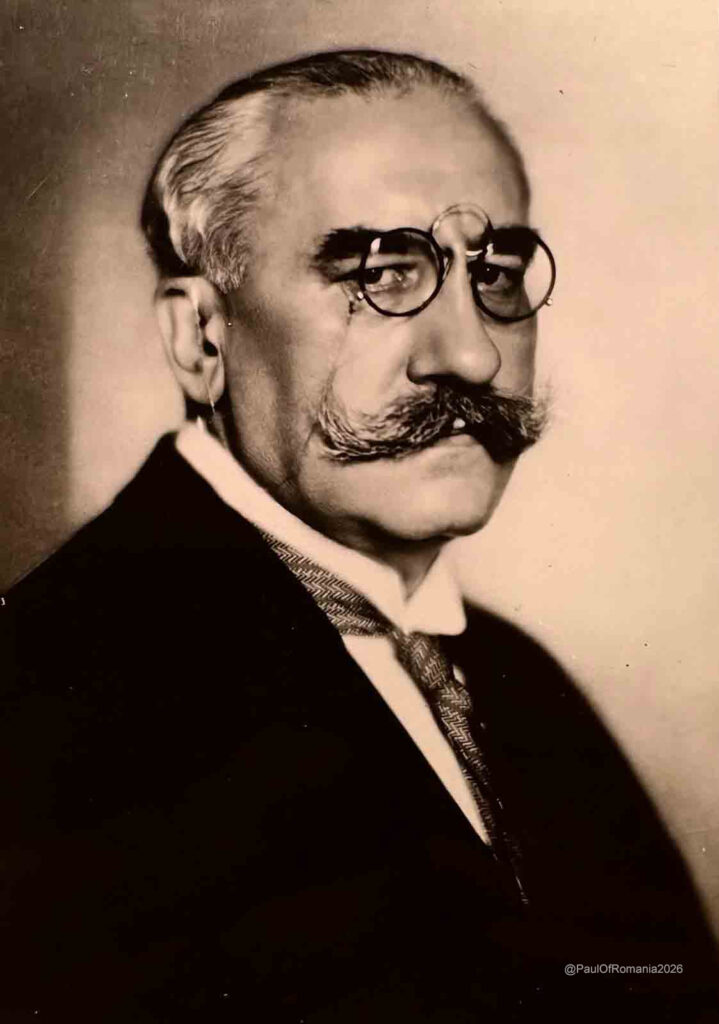
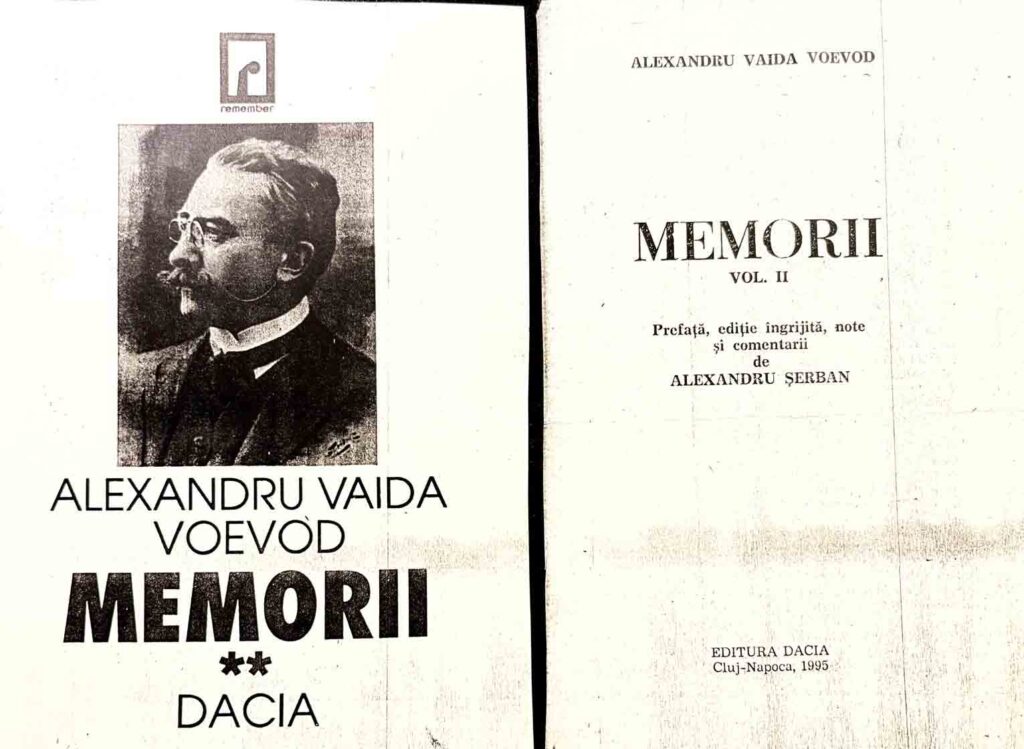
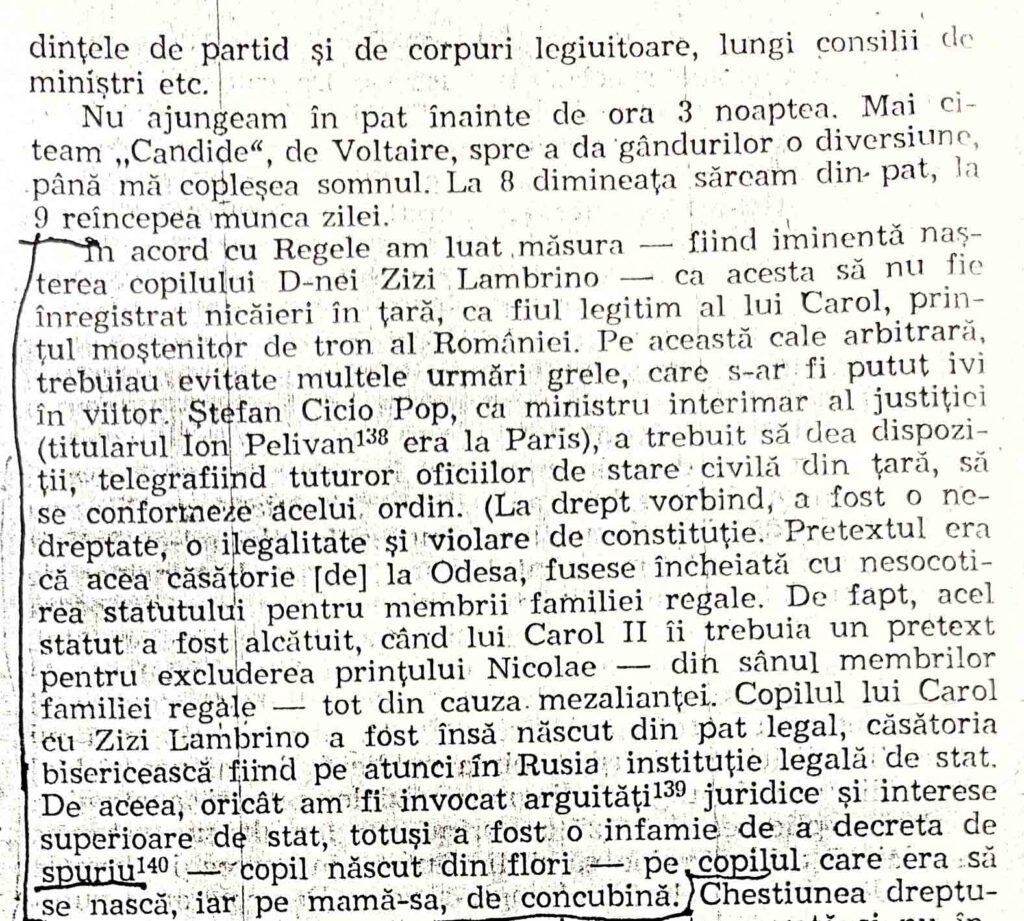
Ex Prime Minister AlexandruVaida-Voevod, in his Memoirs, stayed true to his initial article in Epoca listed above that Prince Paul’s father, HRH Prince Carol Mirecea of Romania was the legal son of future King Carol II
I did not get into bed before 3 o’clock in the morning. I would read “Candide” by Voltaire to give my thoughts a diversion until sleep overwhelmed me. At 8 o’clock in the morning, I would jump out of bed; at 9, the day’s work began again.
In agreement with the King, I took the measure—the birth of Mrs. Zizi Lambrino’s child being imminent—that it should not be registered anywhere in the country as the legitimate son of Carol, the heir prince to the throne of Romania. By this arbitrary path, many heavy consequences that could have arisen in the future were to be avoided. Ștefan Cicio Pop, as interim Minister of Justice (the title-holder Ion Pelivan was in Paris), had to give orders, telegraphing all civil status offices in the country to comply with that order. (Truth be told, it was an injustice, an illegality, and a violation of the constitution). The pretext was that the marriage [from] Odessa had been concluded in disregard of the statute for members of the royal family. In fact, that statute was drafted when Carol II needed a pretext for the exclusion of Prince Nicholas—from the fold of the members of the royal family—also because of a morganatic marriage (mezalianței). The child of Carol with Zizi Lambrino was, however, born of a legal bed, the church marriage being at that time in Russia a legal state institution. Therefore, no matter how many legal arguments and superior interests of the state we might have invoked, it was nonetheless an infamy to decree as spuriu (a child born out of wedlock/a “flower child”) the child who was about to be born, and his mother as a concubine. The matter of rights…
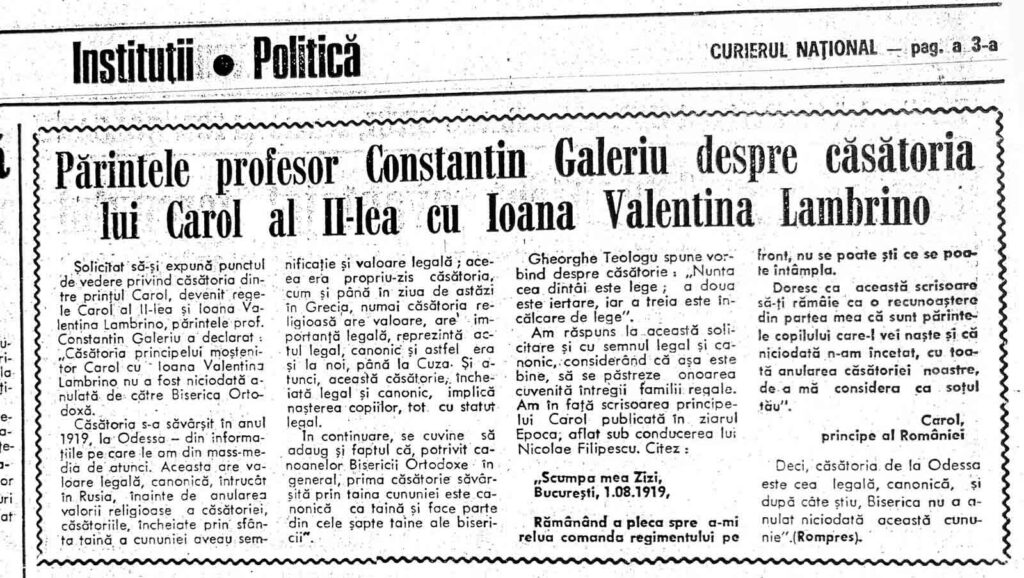
Father Galeriu, a hero during Ceausescu’s dictatorship and professor rector at the Faculty of Theology of Bucarest, made this declaration on national TV and in newspapers in 1995
Father Professor Constantin Galeriu on the marriage of Carol II to Ioana Valentina Lambrino
Asked to express his point of view regarding the marriage between Prince Carol, who later became King Carol II, and Ioana Valentina Lambrino, Father Professor Constantin Galeriu declared:
“The marriage of the Heir Prince Carol to Ioana Valentina Lambrino was never annulled by the Orthodox Church.
The marriage took place in the year 1919, in Odessa—according to information I have from the mass media of that time. This marriage has legal and canonical value, because in Russia, before the annulment of the religious value of marriage, marriages concluded through the holy mystery of the wedding had legal significance and value; this was the marriage proper, just as even to this day in Greece, only the religious marriage has legal importance. It represents a legal, canonical act and was also the case here, until the time of Cuza. And until then, this marriage, concluded legally and canonically, implies the birth of children, also with legal status.
Furthermore, it is proper for me to add the fact that, according to the canons of the Orthodox Church in general, the first marriage performed through the mystery of the wedding is canonical as a mystery and is part of the seven mysteries of the church.
Gheorghe Teologu [Gregory the Theologian] says, speaking of marriage: ‘The first wedding is law; the second is forgiveness, and the third is a violation of the law.’
I have responded to this request with the legal and canonical sign, considering that it is right to preserve the proper honor of the entire royal family. I have before me the letter of Prince Carol published in the newspaper Epoca, then under the leadership of Nicolae Filipescu. I quote:
“My dear Zizi,
Bucharest, 1.08.1919,
Remaining to leave to resume command of the regiment at the front, one cannot know what might happen.
I wish for this letter to remain with you as a recognition on my part that I am the father of the child you will give birth to and that I have never ceased, despite the annulment of our marriage, to consider myself your husband.”
Carol, Prince of Romania
Therefore, the marriage at Odessa is the one that is legal and canonical, and as far as I know, the Church never annulled this wedding.”
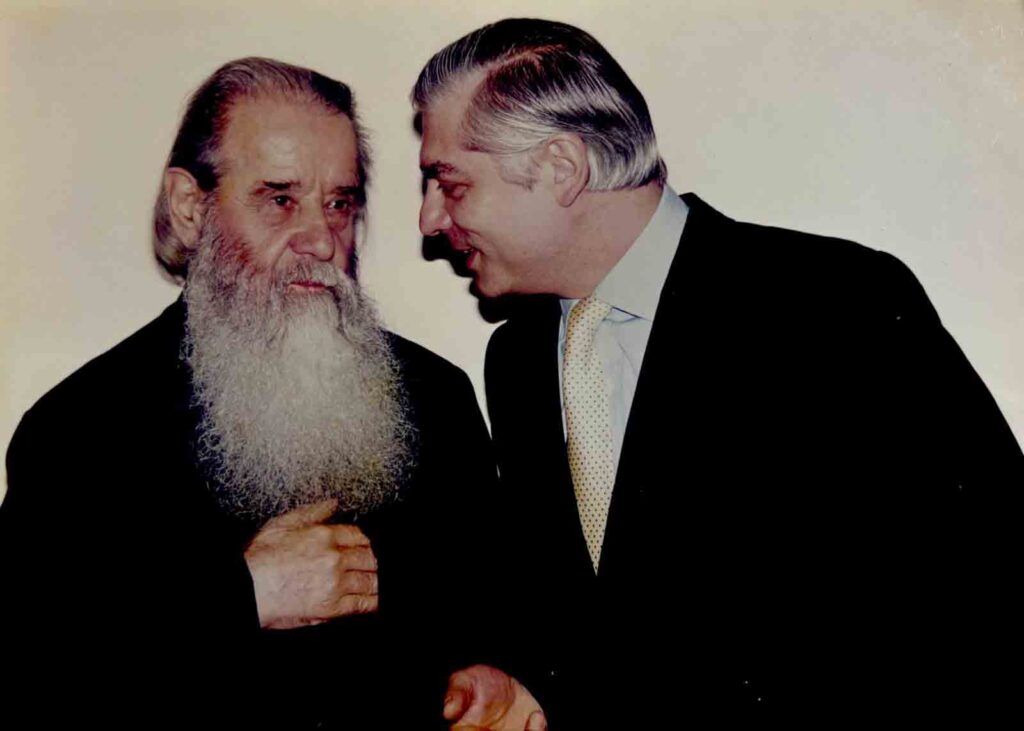
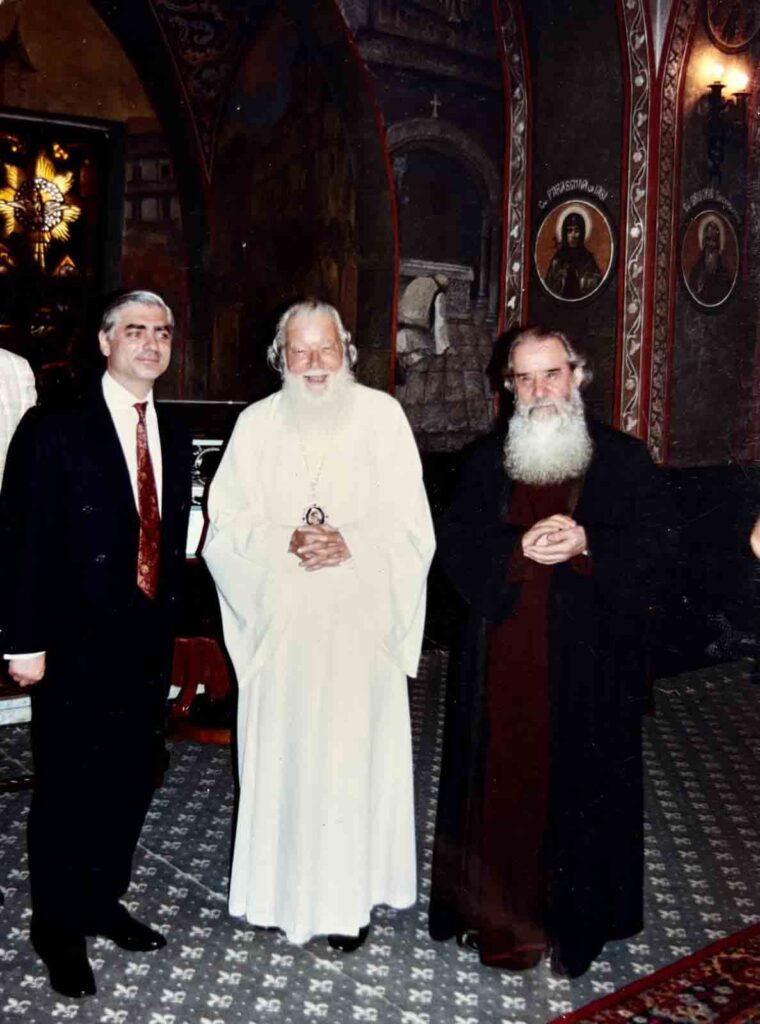
Prince Paul with His Beatitude Patriarch of Romania Teoctist and Father Galeriu